Be a voice, not an echo

Back to Active Life: Fighting COVID-19 Challenges

Roots Local Capacities for Peace Ad Hoc Project with YMCA Ukraine


We are proud to announce the launch of “Back to Active Life: Fighting COVID-19 Challenges” project organised by YMCA Ukraine in partnership with YMCA Europe Roots for Peace. The project will be implemented between May 4 2021 – January 4, 2022.


The aim of the project is to strengthen the capacity of the YMCA Ukraine, as well as of young people in Ukraine and Russia; and to cope with the challenges caused by the COVID-19 and remain operational during and after the pandemic.


Background

The COVID-19 pandemic has brought upon the challenges of extraordinary magnitude all over the world, including Russia and Ukraine – where the strict regulations introduced by the governments in attempt to stop the spread of the infection, have led to numerous problems in the economic, social and personal lives of people.

Lockdowns, restrictions in travelling and face to face communication, increase of unemployment, lack of job opportunities and forced isolation resulted in a wide range of psychological problems and depression among people – with young people especially affected.

It turned out very difficult for the young people to adapt to the new realities: online education, remote work or lack of it altogether, financial instability and restrictions or even ban of live communication with peers, friends and relatives. Many of them feel anxious, isolated and frustrated – unable to succeed in their studies, finding jobs, while experiencing problems in personal development and social interaction.

Pandemic made the international travel and live contacts between Russian and Ukrainian youth, that were already rather low because of tense interstate relationships, very difficult and basically non-existent.

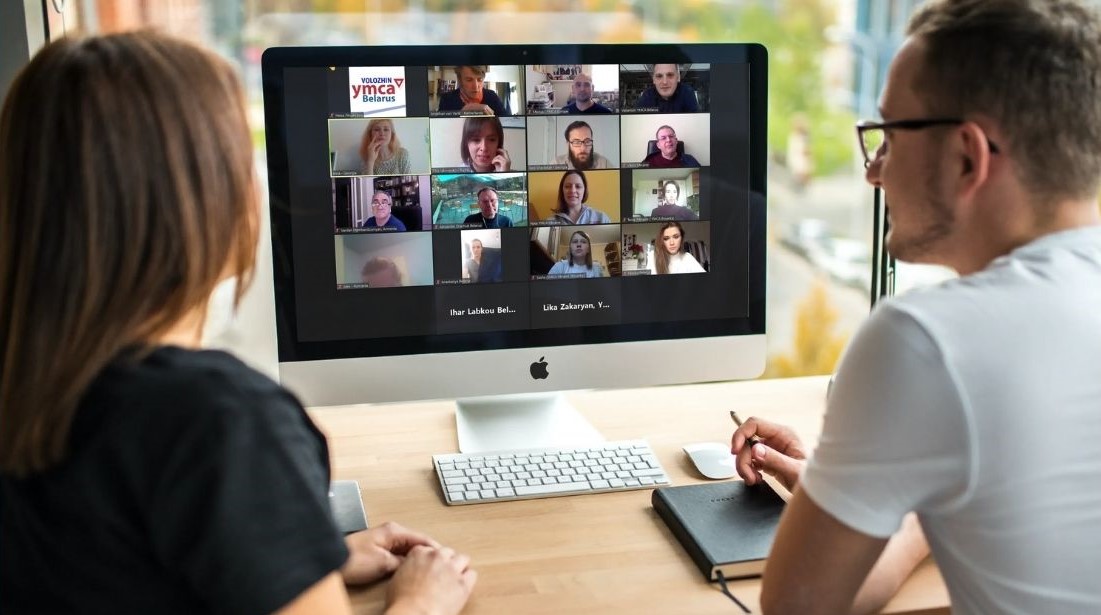
This project strives to remedy the situation and facilitate the communication, dialogue and understanding between Russian and Ukrainian youth by means of their joint participation in online discussions about the common negative consequences of COVID-19 and to devise the ways on how to overcome them.


Implementation Plan

Through various training schemes, the youth volunteer leaders will be educated on relevant issues, such as: psychosocial support & mental health, soft life skills & employability improvement, conflict prevention/resolution, etc.

Eventually, the project beneficiaries will become the multipliers of gained knowledge and skills among their peers in the local communities to assist the youth in adapting to new life realities.

In total, 700 young people aged 19 – 24 and mostly with disadvantaged backgrounds (Internally Displaced, affected by recent military conflict, etc) will be engaged in various activities within the project framework.
Call For Publication Of A Western Balkans Local Language Translation Of The Peacework Guidebook

Within its Roots for Peace Project, YMCA Europe is looking for a partner publishing house to implement locally based translation and publication of Peacework Guidebook (2019) into one of the local languages chiefly used in the Western Balkans (Bosnian / Croatian / Serbian / Montenegrin).

Knowledge of and experience in peacebuilding and conflict transformation publishing will be considered as an advantage.

Tasks: The partner publishing house will arrange for and implement the following tasks:

  • Provide for translation of the book from English into one of the local languages chiefly used in the Western Balkans (Bosnian / Croatian / Serbian / Montenegrin). YMCA Europe will assign  an Expert Editor to facilitate the process by ensuring correct translation of specific terminology;
  • Provide for proofreading of the aforementioned translation (to eliminate misprints, technical omissions and mistakes, etc.);
  • Co-design the ‘visual identity’ of the local book translation in accordance with the original design (in English, provided by the YMCA Europe office) by substituting the English text with the text in the local language and in Latin script;
  • Send the pre-final version of the book for expert editing to YMCA Europe;
  • Correct the final version according to the Expert Editor’s feedback;
  • Provide for all the licenses, registration, etc. necessary for the translation’s e-publication and official cataloguing as such acc. to the local regulations;
  • Prepare the approved final pre-press version of the book translation in an appropriate electronic format and submit it to the expert editor (with YMCA Europe) for final approval;
  • Send the approved final e-version of the translated book to YMCA Europe head office in Brussels;
  • Arrange for printing of 50 hard copies of the translated book (20 of which are to be sent to YMCA Europe head office in Brussels, the remaining 30 being used for local promo purposes of the translation publishing partner).

The deadline for completion of the task is the end of February 2022.

Please send your letter of interest and financial proposals (including info about / CVs of the key actors / people involved – the publishing house, the translator) to YMCA Europe Executive Secretary Vardan Hambardzumyan at vardan@ymcaeurope.com. This call is open till  June 7th, 2021.

World by word: hiSTORY behind us

Last week the global community commemorated the date that marked the end of one of the most tragic and devastating chapters in human century – The World War II.

The day that laid the foundation of a new world which was meant to become more peaceful, compassionate and free.

And while the legacy lives on and there have been no conflicts of a similar magnitude ever since, we are still far from those ideals of global harmony and coexistence that the peacemakers of 75 years ago and now dream about and strive for.

Roots has long been there to uphold and spread those ideals – “World by word: hiSTORY behind us” online event in cooperation with YMCA Netherlands on May 7th was an international endeavour to delve in the past and “find stories of loss, violence and regret, but also of friendship and kindness.” And to search for the ways to remember our shared history and draw conclusions from it to “help us with peace work in the present”.

And while the original plan to bring participants together for a physical event was rendered impossible by still rampant Covid19 pandemic across the globe, the interest and turnout for a digital event was still very high – 20 participants from Armenia, Belarus, Georgia, Nagorno-Karabakh, The Netherlands, Portugal, Romania, Russia & Ukraine came together to reflect upon and share their personal stories.

And while the large majority were born long after the war was over, everyone had something to tell and someone to remember… As well as to once again realize how closely related we all are – in misfortune and in joy… And only together we will manage to reach the goal that united us online last Friday evening, will reunite us in the Netherlands next year & will keep us pushing forward for – the belief that it takes each and every one of us and every little step we take to make our shared home a better place… Not just for us, but for everyone!

Because peace can only be achieved and sustained if one works for it every day – and each day safeguarding it is a Victory Day!

Some of the stories can be found here:  Special Storylines

The event recording below:

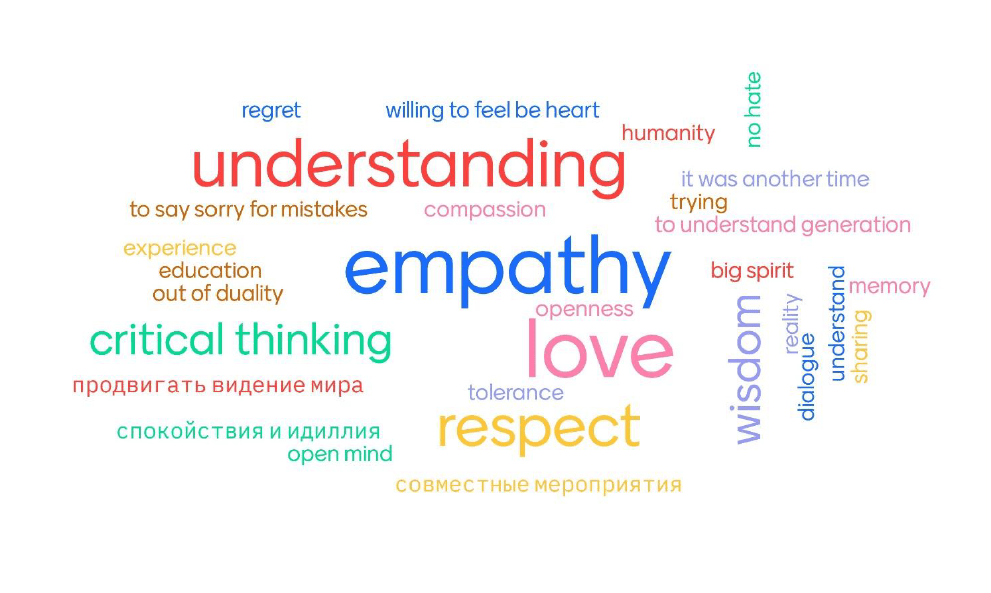
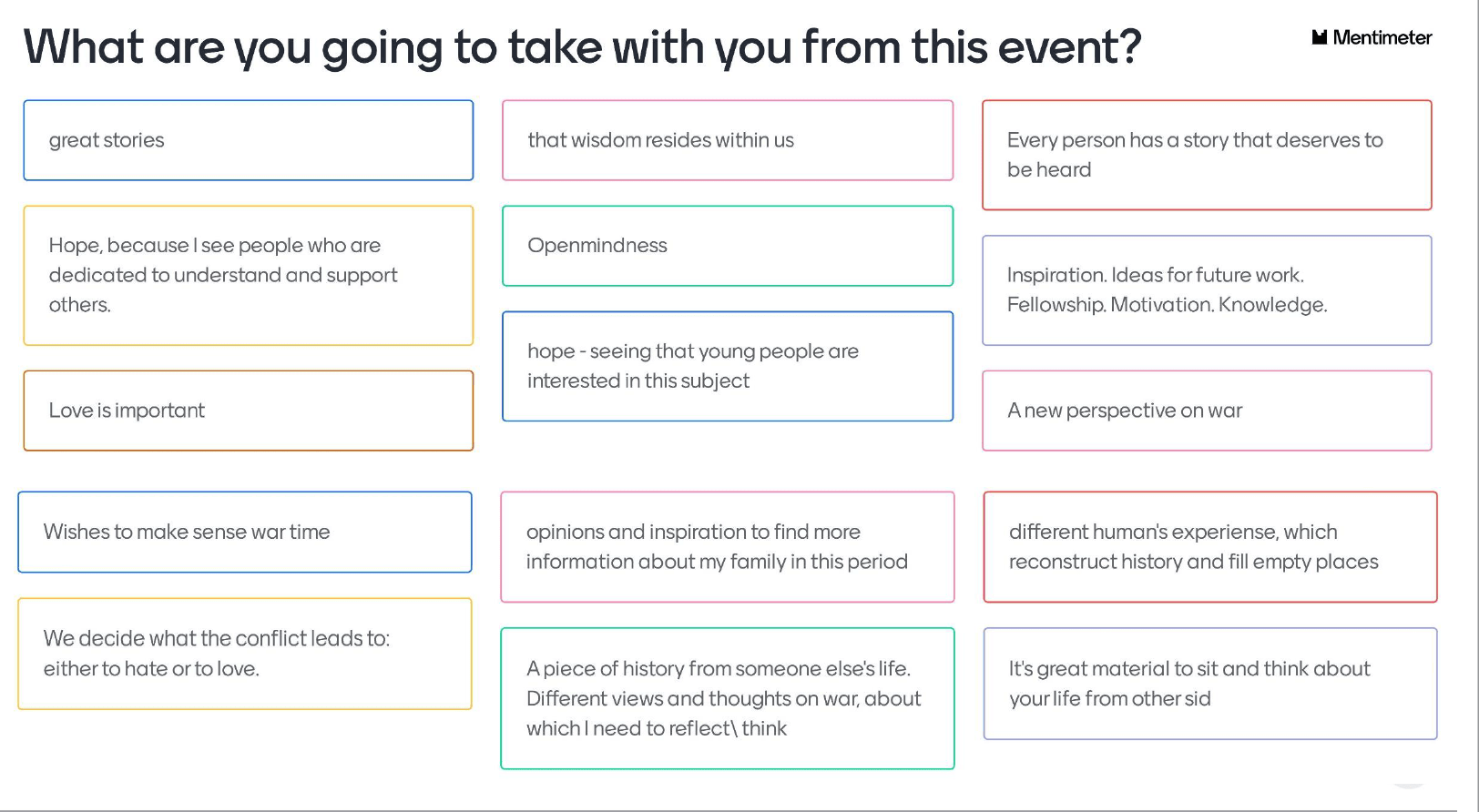
P.S. To sum it all up, attendees were asked 2 questions: Empathy & Love came on top as keywords to what they considered as the most crucial part of peace work; while Open Mindedness & Hope were the major takeaways from the event, among others.

I am Roots: Marta Campana

Since its inception in 2012 and with two cohorts (2012-2014, 2014-2019) of participants that passed through it, the Roots Peace Work Institute (PWI) sought to enroll young leaders of different backgrounds from across Europe, young people who were and are a voice and not an echo – eager to learn, to try, to grow… Like raw diamonds to shine after the grind.

And we believe that most of these 48 Alumni managed to develop both personally and professionally as they journeyed through PWI.

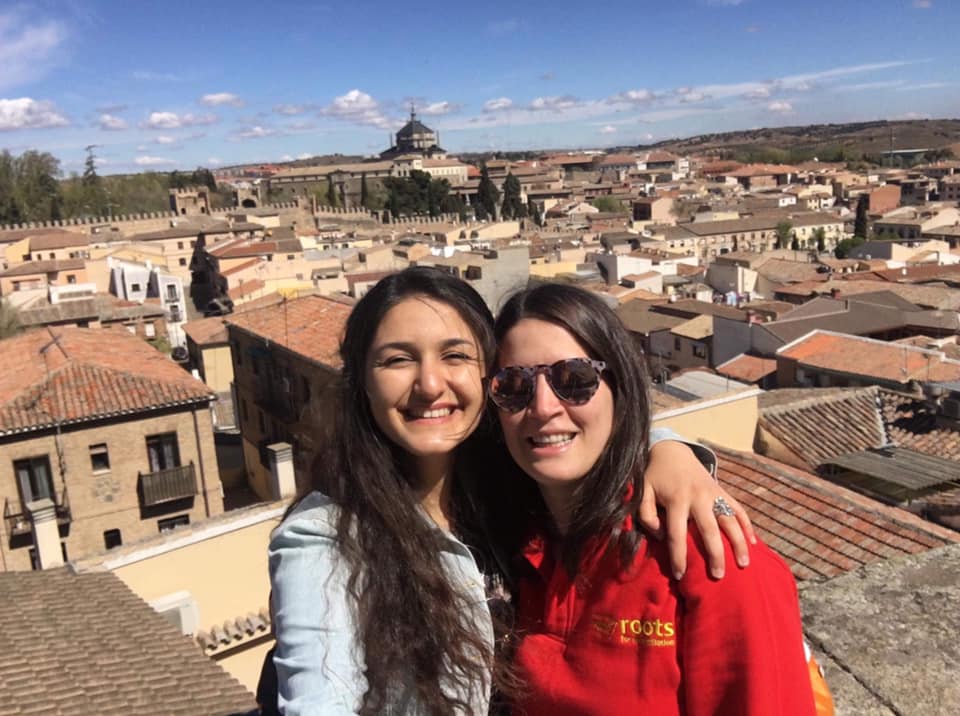
Today we share with you the story of Marta, a volleyball lover and a warm-hearted activist from Spain.

Marta studied Psychology and currently she is preparing for the specialist exam that will allow her to work in public hospitals. At the same time, she is pursuing the Master’s degree in sanitary psychology.

Before joining the Roots, Marta had little experience in peace work and conflict studies, but always had a desire to do good for the world. Volunteering since she was 16 for different causes and initiatives in her hometown and community, she did not have a real encounter with peacebuilding until she came across Roots.

Marta joined the Peacework Institute and in many aspects, as she says – it changed her life:

“The program opened my mind and made me realize how privileged I am. I made a lot of incredible friends and lived with them the most amazing experiences of my life. If I have to describe the Roots in three words, I would choose these ones: friendship, open mind, belonging” Marta says.

The Roots is not only a project, but also a life school in some way, through which the participants achieve something special and it helps people to take out the best of them.

This is how usually the Roots family refers to the project. And Marta is one of those who says that Roots made her more confident about herself and how she can achieve anything if she works hard and makes an effort for it. And yes, this is one of the most important values that Roots share with people: anything you can aim for can become real with the right attitude and hard work!

Talking about unforgettable moments, it was quite hard for Marta to choose one as she has so many of them.

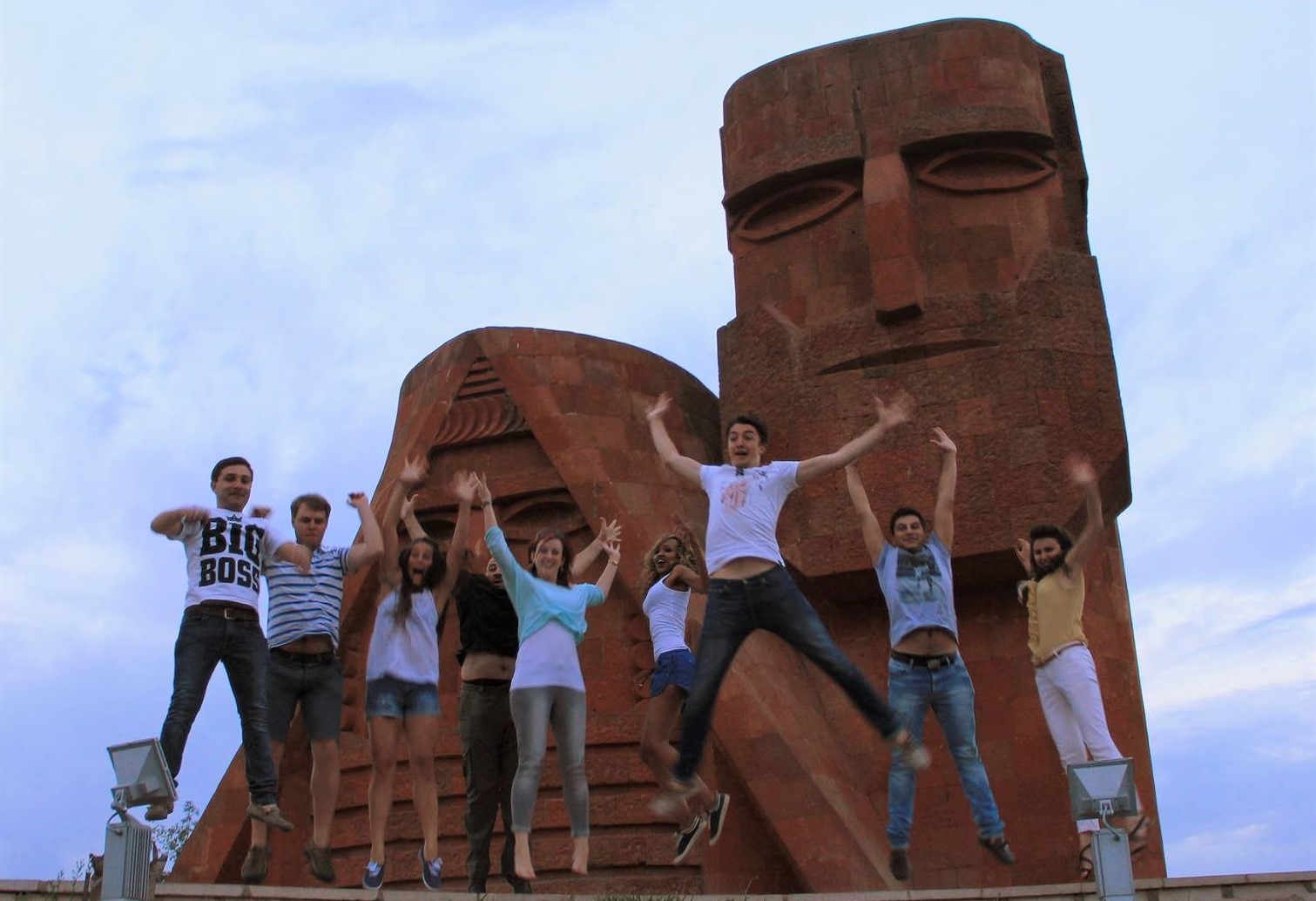
“But especially I think I will never forget our trip to Nagorno-Karabakh, as it was like I found a country and people that felt like being home”.

The study visit to Karabakh was in August 2014 (foto album here), and till today the locals there remember Marta as a warm-hearted person with whom they share great memories.


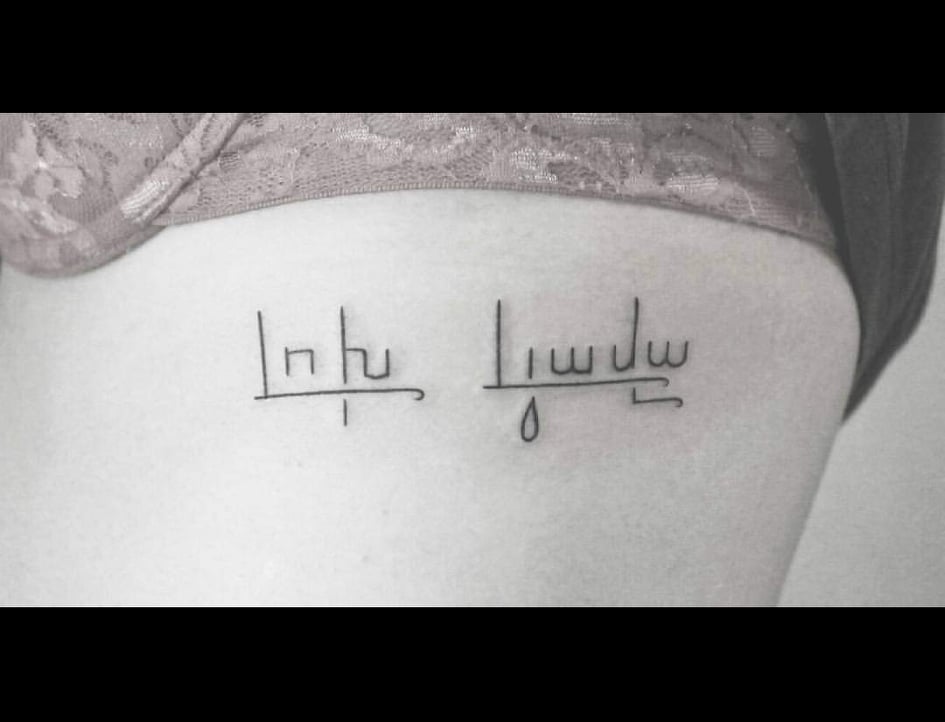
Love for Karabakh is not shown only by her words. Marta got close to it so much that she made a tattoo in the Armenian language which says “Լոխ լյավա” (everything is fine). With this act, she connected herself physically to Karabakh forever.

This is all that Roots is about: not just making a contact, but making a deep connection.. deep all the way to the roots!


Since 2007 and ever growing, from the South to the North, from the East to the West of Europe – the Roots has always been there for those striving to make this world a better and safer place, a peaceful home for all. We go where the need is, responding quickly to the emerging issues with the legacy and mandate, capacity and adaptability gained for all these years.

By donating to the Roots, you invest in youth opinion leaders from all corners of Europe – varied by age, ethnicity, religion, race or wealth, but united with one strong conviction – Peace is the only way!

Report of the event World by Word: hiSTORY Behind Us, May 7th 2021

On May 7th a great event took place: ”World by Word: hiSTORY behind us”.

This online program was in Russian and English and led to incredible results and conclusions. The participants connected online from Romania, Belarus, Georgia, Ukraine, Netherlands, Russia, Artsakh and from other countries. We are happy that, despite the difficult moments that the Covid19 crisis brings, we still manage to connect. We are also happy that so many participants shared their opinions and stories related to commemoration and remembrance. Central themes were the Second World War and hate speech against minorities.

During the first part of the event participants did some games that made them feel more connected and comfortable with others, even when these lived in vastly different countries. With these games they also shared who they were and how long they had been connected with the YMCA.

In the second part of the event we used Menti to do some questions reflecting the future.

The  event was filled with stories about war and peace, as well as difficult situations of exclusion and violence. Most of these stories were family stories.

Jonathan van Varik’s story about his grandfather, for instance, made us understand that when you are in this context sometimes you need to see two sides of a conflict. In either side you can see terrified people and no one is happy. It’s not easy to look for both sides, especially when a conflicts seems to have a clear ‘bad guy’. Sometimes people are just following orders given to them.

Following this story, one of the participants told another one of his own family. It’s not easy to see beyond the hate that conflict bring. Especially when people lost family members or loved ones. This doesn’t mean kindness doesn’t persist; in some cases people helped prisoners that didn’t have food.

One of the conclusions was: “The peace comes with empathy. And without this feeling of empathy, hate will remain and war and violence will repeat itself. So it stays important to fight against hate.”


The story shared by Irina Berdzenishvili was about memories and the trauma related to these memories. It can be very difficult to overcome these traumas. She felt that no one can help her. She had to overcome these alone. She gave us an example of her friendship to a girl from another country and how difficult it can be to be a friend of someone that belongs to the other side of a national conflict.

We reflected on how to build bridges rather than walls. One of the participants gave an opinion about the importance of love. She stressed how important it is to respect another’s reality, even when you cannot understand or agree with this person.

We believe that stories can connect people. The synergy of being together and telling stories is an important task that can change lives. Telling stories and exchanging our points of view is essential in order to prevent future conflict. During the current days of COVID19 we cannot have this type of exchange face-to-face, but by organising these types of online events we reach closer to this goal.


The last story told was “Maria’s Story”. It is a family story told by Valentin Chukhlatyi. It’s a love story that made us understand how difficult it is to fall in love with someone everyone sees as an enemy. A love affair between a local girl and a soldier may put her family at risk. Her father would not allow of this relationship. For this family it was difficult to overcome the constant fear the war brought.

The central theme is that it is sometimes really difficult to  understand and define the actions some people take in times of fear. It is difficult to call an action ‘right or wrong’ when feelings and emotions are involved. This love story made another participant reveal the story of her parents.


In the end of the event the organisers explained that people can share more stories by sending these by e-mail to jonathan@ymca.nl . These stories will be placed online on the blog of World by Word. They also encouraged the use of the hashtag #historybehindus. In the future, a Instagram page of the project will be launched.

At the end of this event there was one minute of silence. We also lit a candle in remembrance of the tragedies of the Second World War. The event closed with a Menti-survey. The results showed how the event changed the thinking after hearing these stories. Sharing impressions and thoughts is, after all, a crucial element of peace building.

The event was recorded (video above) and streamed on the Facebook page of  YMCA Europe.

Written by Maria Costa, (Portugal) – Roots Peace Work Institute Alumna


This article is part of the World by Word campaign. This project originated at YMCA Netherlands and is a multinational cooperation of YMCA Europe Roots for Peace project, and the Dutch former Soviet Cemetery Leusden.  World by Word is a prelude to an Erasmus+ funded Youth Exchange “Then, now and later: towards a composite memory”, taking place in the Netherlands in 2022.

e-bridge: 2021 Roots Peace Award Project Launch Event

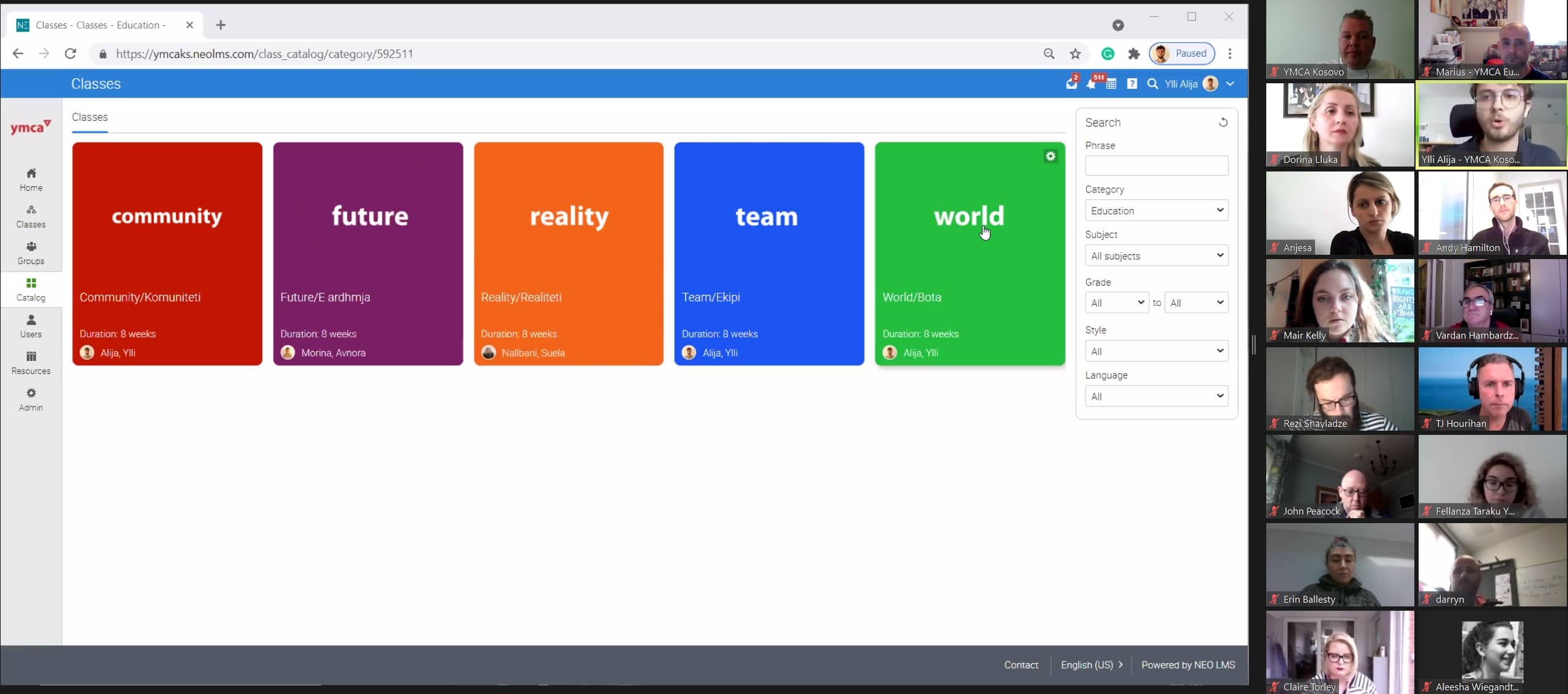
May the Fourth may sound like a start of a quote familiar to millions of Star Wars fans all over the world, but for the Roots it definitely marked the Launch of another landmark initiative in the making – “e-bridge” project by YMCA Kosovo is an international endeavor aiming to build a peace & reconciliation based youth friendly e-learning programme, accessible to young people across the continent of Europe.

It has become possible through Roots Local Capacities for Peace Award that deservedly went to Kosovo YMCA in 2021. You can learn more about the 2021 winners here.

In cooperation with YMCAs of Ireland & Serbia and engaging dozens of young people from all partner organizations, “e-bridge” envisages to provide a better “gateway” for young people to access information, activities, or materials within their YMCA before stepping into European and other peace building initiatives.

The idea is to ignite the spark for future peace builders in Europe.

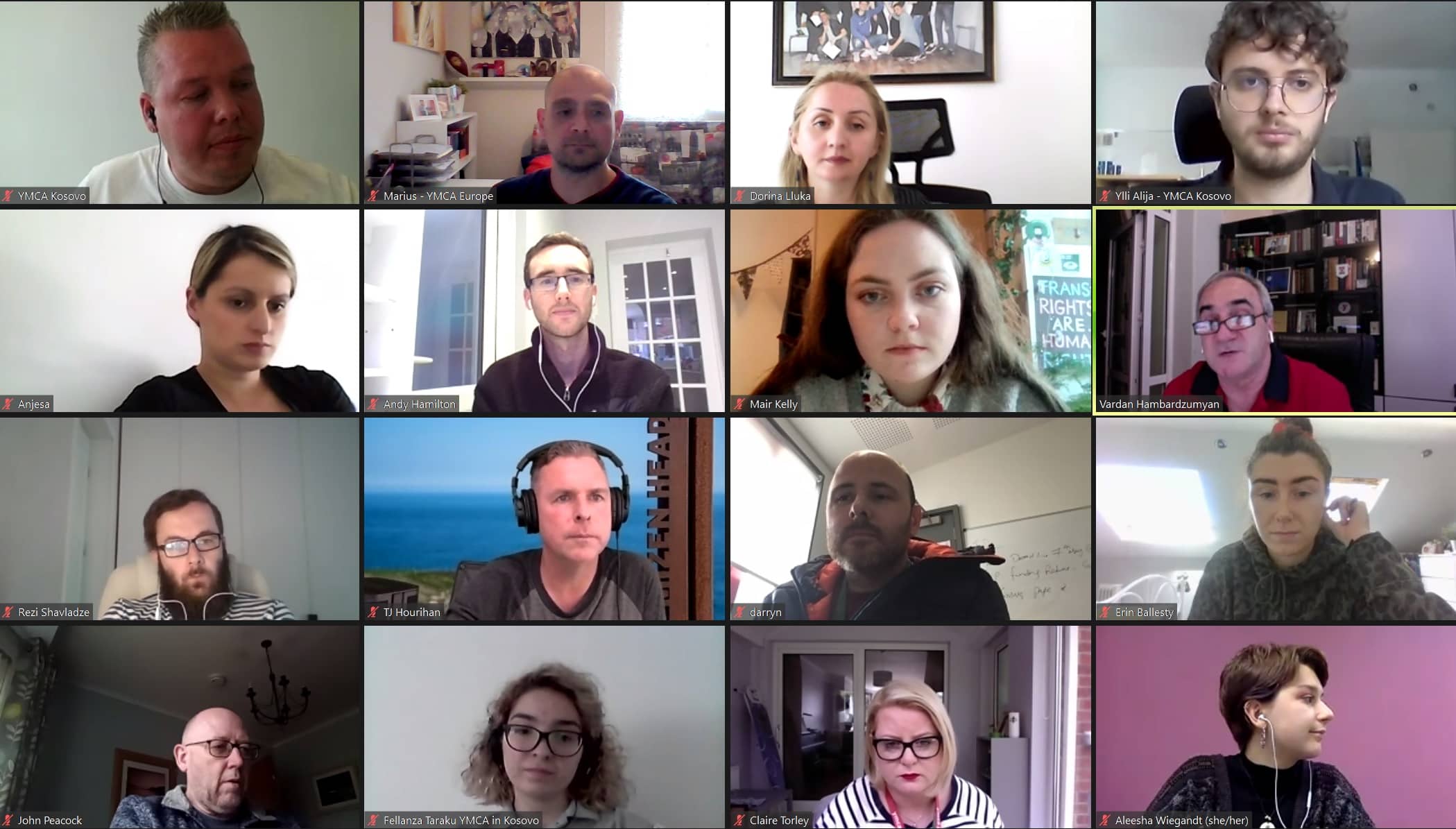
So, there was a lot to discuss and share when 17 representatives of YMCA Europe Roots for Peace, YMCA Kosovo & Ireland got together in digital space to officially kickstart the “e-bridge”.

Reflections, general Roots overview, project publicity and reporting requirements, pledges of commitment, roadmap for action – all default components were in place and duly attended to, but the major message that transpired and stood out is that of commitment to the Roots and the ideals it always upheld – partnership, empowerment & unity.

And given the successful history of cooperation of our project with the parties that came together, we are confident that “e-bridge” will write another successful chapter in the story of Roots…

May the Force be with you, “e-bridge”!


Since 2007 and ever growing, from the South to the North, from the East to the West of Europe – the Roots has always been there for those striving to make this world a better and safer place, a peaceful home for all. We go where the need is, responding quickly to the emerging issues with the legacy and mandate, capacity and adaptability gained for all these years.

By donating to the Roots, you invest in youth opinion leaders from all corners of Europe – varied by age, ethnicity, religion, race or wealth, but united with one strong conviction – Peace is the only way!

World By Word: YMCA and WWII

Almost as soon as the war broke out, YMCA developed mobile canteens to bring refreshments to the troops.

These second-hand vans, painted camouflage green, were first used in East London and by the end of 1940 there were 500 vans bringing refreshments to troops, rescue workers and victims of bombing raids. Vans also travelled to Belgium and France. At the retreat of Dunkirk, YMCA remained on the beaches until ordered to leave.

The tea cars followed advancing and withdrawing armies. As well as serving mugs of tea, they sold cigarettes, chocolate, cake, hair cream, toothpaste and stationery. In contrast to the static huts of the First World War, the tea car was a more mobile service for increasingly changeable theatres of war. On the Home Front, particularly during the Blitz, these mobile canteens provided food and drink to those made homeless and hungry.

YMCA’s world fellowship came into its own as the war progressed: tea cars, cinema vans, and mobile libraries bearing the red triangle of YMCA were a common sight. The first British YMCA mobile canteen landed on the Normandy beaches on 29 July 1944.

Internationally, the World Alliance of YMCAs expanded its work with prisoners of war and refugees: more than 250 secretaries visited camps in 38 countries. In Britain, there were large- scale education programs for prisoners of war. Around a thousand prisoners were trained as primary school teachers, coached to pass university entrance exams or given basic theological training.

In the United States, YMCA, together with five other national voluntary organisations, founded the United Service Organisations for National Defence, today known as the USO. YMCA staff worked in U.S. internment camps holding 110,000 Japanese Americans, organizing clubs and activities for the children.

In Australia, along with the Salvation Army, YMCA was given responsibility for troops’ ‘Recreational, Social and Moral Welfare’ and ‘care of the walking wounded’. YMCA was afforded the same status as the Red Cross Society, the Australian Comforts Fund and the Salvation Army.

This gave YMCA ‘official military establishment status’ – essentially, we had permission to operate with troops in all areas and particularly in front line positions. The official history of the Australian YMCA provides an insight to the dangers faced by mobile units, some of which found themselves ahead of the front lines:

‘Sometimes they [the mobile canteens] were official vehicles and at other times they were trucks that had been co-opted. The canteens enabled YMCA staff to keep up with the battle or at time get ahead of it. In these circumstances the canteens came under attack and the men were wounded or captured.’

This story has been provided by the YMCA UK & Wales


This article is part of the World by Word campaign. This project originated at YMCA Netherlands and is a multinational cooperation of YMCA Europe Roots for Peace project, and the Dutch former Soviet Cemetery Leusden.  World by Word is a prelude to an Erasmus+ funded Youth Exchange “Then, now and later: towards a composite memory”, taking place in the Netherlands in 2022.

World By Word: story of Pranvera

რაც მტრობას დაუნგრევია, სიყვარულს უშენებია
And what has been ruined by hostility, has been rebuilt by love.

When I was a little girl I liked doing a lot of silly things. I was collecting stickers of Spanish Telenovela actors and actresses that my grandma was watching (I still have no explanation for this action but, yes, I am proud of my collection). I used to take long, narrow ways back home from school pretending I was on a secret quest and used to arrive home completely dirty.

I was dreaming of having an alien friend and because of this I would write letters for them and leaving them in abandoned places.

Little did I know that there was a girl in a country far from mine called Kosovo, and in this county lived a girl of my age and who was doing exactly the same things with the same excitement.

When I first arrived in Romania for some reason people that I was seeing for the first time were already referring to me by the name Pranvera. Soon I met a girl who everybody thought I was. Almost a year has passed since the day I met her but people are just as confused as the first day when they saw Pranvera and me together.

Pranvera is a girl whose name means spring, but her whole self is like a warm spring day. After spending nights watching TV shows, waking up once a week early in the morning for 2 lei shopping with the same excitement for the whole 6 months. 2, no wait, 3 self-isolations in the same apartment and countless kilometers that we covered together in this small town while walking with the speed that was more like running, we started to discover that despite the fact that we could never see the similarity between us before we were pretty much the same.

I am a person of art and imagination and she is a girl with strong reasoning and facts in her mind. We started sharing our dreams and plans and spent hours thinking about all the great adventures we could have and all the changes we could make in the world as perfect non-biological twins.

I can clearly recall the evening when I was with my friends, sharing the cultures of our, and other countries, promising where we would take each other and how we would spend the time together in our own countries.

This was a moment when Pranvera and I realized we can’t visit each other’s countries for some political and post-conflict reasons that I can not even clearly understand. For a second, I felt anger and fear, as I felt one of the closest friends that I’ve got was taken away from me. But no, we quickly started searching for countries where both of us could go without problems and the temporal fear of not being able to meet each other and failing our dreams soon disappeared.

This is not a story about war or conflict, it’s a story about peace that always finds its way to burst from the frozen, post-winter ground as an Iris flower in spring. This is a statement, telling us that borders can never limit feelings and relationships.

This is a motivation to keep planning and working towards a society without walls and with bridges. Also, this is a request for everyone who has ever been in my shoes. Please, hold on to the dear people that you meet and never let any outer condition affect your well-being and dreams.

Irina Berdzenishvili is a YMCA Georgia volunteer and student currently living in Resita, Romania.


This article is part of the World by Word campaign. This project originated at YMCA Netherlands and is a multinational cooperation of YMCA Europe Roots for Peace project, and the Dutch former Soviet Cemetery Leusden.  World by Word is a prelude to an Erasmus+ funded Youth Exchange “Then, now and later: towards a composite memory”, taking place in the Netherlands in 2022.

World By Word: story of Valentin

Hi. Let me introduce myself. My name is Valentin. I like history. But I think that we can learn history in different ways.

What does HISTORY mean for you? Imagined?

For me it is numerous brooks which flow into one river.

When I was a student of historical faculty I heard a lot of different stories about The World War II.  Most of them tell us about the tragedy of war. But today I want to tell you a story about Love. It’s not the story of my own family, but I’d like to share this one with you.

This story is about Maria Demina (1923 -2011). She took part in the Second World War. And her story was a secret for everyone for about 67 years. Before she died, she shared the story with her daughter.

So, it was June 1941. She was 17 and she graduated school. Maria had great plans for her future. She wanted to enter the university and became a doctor.

22 June her village was occupied. There was an German airfield. And a lot of soldiers lived in that village. At the beginning everything was ok. Nobody resisted. And in 1941 village people lived mostly their typical life. They worked in the field, did their housework. Sometimes villagers spent their free time with dances and music in a local club. And Germans took part in it too.

One day Maria came to the club. Germans brought a gramophone and all danced together. An officer invited Maria for a dance. Maria didn’t know what happened, but she said later that it was love at first sight.  After evening he took her home. The officer told Maria about his family. He was an artist before. He didn’t want to fight. But now he was an officer and he must follow orders.

Near the house Maria’s father saw them. The father ordered Maria to forget about that officer. Because he was German. Their friendship may cause very big problems to their family. Maria became a prisoner of her own family. Though they kept dating secretly.

Once the officer came to her family and talked to her parents. He said that he was not an enemy. He didn’t want to fight. Father told him to go away. Because their relationship can cause problems for everyone. At that time the guerrillas came to that area.

The officer went. Later Maria received a letter from him. The officer declared his love. And asked Maria to marry him.

Maria didn’t know what to do at that time. But fate decided for them. In some days the officer’s plane was shot down.

This War changed Maria’s life. After 1943 she volunteered as a nurse. And she returned home only in 1945.

Later she had a man, a daughter, but… She carried her secret with her through her entire life. This love story she shared with a daughter in the very end. Keeping smiling, remembering her first love, first kiss and their talks.

Valentine Chukhlatyi is a YMCA Volunteer from Brest, Belarus


This article is part of the World by Word campaign. This project originated at YMCA Netherlands and is a multinational cooperation of YMCA Europe Roots for Peace project, and the Dutch former Soviet Cemetery Leusden.  World by Word is a prelude to an Erasmus+ funded Youth Exchange “Then, now and later: towards a composite memory”, taking place in the Netherlands in 2022.

Roots at FriEnt Peace Building Forum

Roots was in a spotlight at the FriEnt Peace Building Forum, held online April 27 – 29, 2021. Attended by hundreds of participants from all over the world, the virtual space offered multiple opportunities for engagement and networking via workshops and discussion panels facilitated by prominent peace workers and activists & dedicated to the issues affecting global security.

And we had our own say too – Lika Zakaryan, YMCA Europe Roots for Peace project Media Consultant featured as one of the panelists during the workshop that focused on “the challenges and opportunities for an active engagement of the multilateral structures of OSCE and EU to contribute to building and maintaining constructive relations between states and societies in the South Caucasus Region.” – with recent conflict in Nagorno Karabakh especially considered.

As a local and one that lived through the horrors of the recent 44-day war that claimed thousands of lives and left many more displaced and without shelter, she spoke about the harsh reality and challenges faced by the people of Karabakh – the situation that requires drastic attention and resolution on a much wider scale.

The workshop was interactive and attendees had the opportunity to enter in discussion and pose questions, as well as to feedback upon the conclusion. Here are some selected quotes:

“People of Karabakh feel betrayed by the International community”

“Refocus is urgent, stronger role for the EU and Germany in the OSCE-Minsk Group.”

“Immediate response to the humanitarian crisis, including trauma-healing.”

“Focus on youth is instrumental.”

Valuable observations, indeed. And there can be no categories when the lives of people are at stake… We love the same, we hurt the same… And we only succeed… together!