Be a voice, not an echo

Peace Work Institute makes you understand that you matter

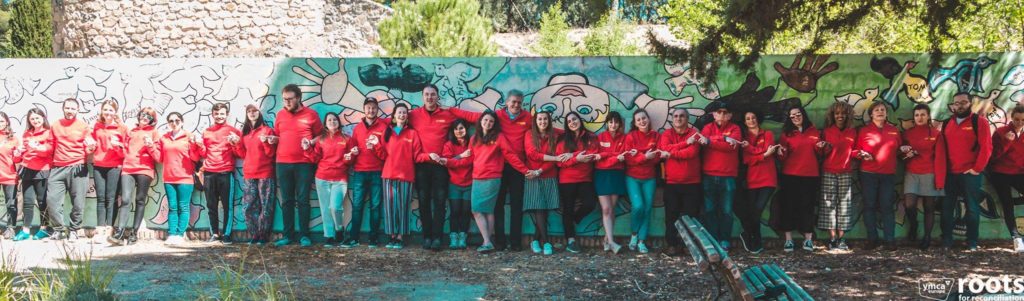
Before becoming a part of the Peace Work Institute family, I have heard about this project from my friends who were participating in the previous events held by the Roots. The stories they told, the emotions they had, the connections they kept with the international friends made me think of becoming one of them. I applied and got admitted.

At first, I was concerned about being in a team with people from a conflict zone, talking to them, but after communicating and sharing with them in a warm atmosphere my concerns disappeared. The first event took place in Tbilisi, Georgia. It was my first step into peacebuilding. I returned home with a ‘bag’ full of friends, knowledge, experience and unforgettable memories. This ‘bag’ became bigger and bigger after each event.

In Berlin, we developed a basis for a new Tandem project called  ‘Art4Peace’ which took place in Ureki, Georgia. This event was an unforgettable experience for most of the participants, because it was all about making peace together, having fun together, discussing together. Before participating in it, I would never have imagined communicating with people from a conflict zone, having fun with them, dance, sing and perform together, or – simple as it is – eating at the same table was possible. I did communicate with them, I did have fun with them, I did all the things I have mentioned, of which I am proud.

I will never forget the moment when, during the playback theatre, people shared their stories and emotions and others performed them. This was the peak of the emotional sharing: so many stories and so many similarities between us and our feelings. Peace Work Institute project gave me knowledge and skills which I am still using in my life. This project gave me tolerance towards a lot of things, changed my way of thinking, pushed me to discover myself more. More specifically, I started to pay more attention to connectors than dividers, decreased critical thinking, started avoiding negative impacts. The project gives a space to express yourself, makes you feel a part of a worldwide family, builds peace with you and makes you understand that – You Matter.


Marina Babayan, Armenia – Roots Peace Work Institute 2018 Alumna


More testimonials available in our 

Peace Work Institute turned out to be the experience of a lifetime

I have been a member of YMCA Georgia since I was ten. My experience, in the beginning, was just camps, festivals and then volunteering. Once I found out about the second generation of Peace Work Institute and the chance of being its participant, the first thing I did was approaching one person that I knew from the first Peace Work Institute generation and asked about her experience. She told me that everything I had seen at the YMCA so far was relatively fun and entertaining compared to what happened in the Peace Work Institute seminars. She said it was a place where the preparation of magic starts. It made me a little bit scared, yet motivated, because I realized it could give me skills that would help me in real life. It knew it would teach me how to plan and then implement something because I had seen those people doing it very well. When I got involved in Peace Work Institute, my expectations were met.

Additionally, I experienced a lot of amazing things I had no idea about before. Since the very first seminar in Tbilisi, I got the feeling that I was in the hands of professionals. The programme seemed hard, but very interesting. Every day, on each and every seminar Vardan, Marius and Rezi would teach us about different methodologies and everything was new and exciting, as I could see how powerful all this could be. I thought I could trust these people and just follow them because they had already done very important and powerful projects in the past. Having an opportunity to learn from them was really exciting for me.

During the journey with the YMCA and Peace Work Institute, I got a lot of useful skills and knowledge that influenced my life a lot. Every seminar was full of useful information and tools that inspired me greatly. First of all, I would highlight the Theory of Change methodology, which helped us to build new ideas and our tandem projects were a result of it. Whenever I have to plan something, I start thinking about one simple idea and then develop it with people that share it. Planning of anything would make no sense anymore unless it was not planed along the lines of Do No Harm.

This approach was completely new to me and it really changed my ways of working. Equally important turned out to be the seminar about critical thinking, because it contributed to the development of a helpful skill, not only in my professional but also my everyday citizen’s life.

Besides these approaches, which had a huge impact on me, there were also the games. I still use the ‘Needs and fears’ game while working with any age group because it has helped me tremendously to start thinking from different perspectives and imagining myself in someone else’s shoes. In short, Peace Work Institute turned out to be the experience of a lifetime. I think I was given the chance to join the PWI in a perfect moment: I was eighteen and thinking about my major at my studies. It had a huge impact on my decision-making process and the fact that now I study humanities and social sciences instead of politics and governance is a result of it. I have been a member of YMCA Georgia since I was ten. My experience in the beginning was just camps, festivals and then volunteering.

Once I found out about the second generation of Peace Work Institute and the chance of being its participant, the first thing I did was approaching one person that I knew from the first PWI generation and asked about her experience. She told me that everything I had seen at the YMCA so far was relatively fun and entertaining compared to what 133 Spending time with the organizers’ team and the participants helped me to set an example of how to work with issues I am concerned about and it made me more goal-oriented. Still, the biggest difference I see now is the following: before PWI I remember myself being interested in every field of art and science. I used to try everything and wanted to have the result as soon as possible.

Peace Work Institute taught me to be patient while working on important issues because big changes demand time. And as ‘everything is a failure in the middle’, so I always try to keep doing whatever I’m doing until I see the result I aimed for. This experience made me realize that everything I do has to be done well. There is something very important that Marius, my first mentor, used to tell us and now I keep telling myself every day: ‘Quality over quantity!’ I am sure that everything I have learned and experienced in PWI will help me a lot to reach my goals.

My plans are mostly connected to e-activism and campaigning and I work with people from different backgrounds. In that regard, the knowledge I have gotten from P.E.A.C.E. seminars is simply a treasure that I am going to use as much as possible. And whatever I will be doing in the future, the TOC and DNH will always be my metrics to plan and evaluate my work.


Irina Berdzenishvili, Georgia – Roots Peace Work Institute 2018 Alumna


More testimonials available in our 

Knowing a dear person from another country changes one’s point of view’

It is impossible to mention the most influential methodology or specific knowledge that I mostly use in my work or life. It has certainly been a strong complex of experiences that I now use as a basis for all the work and projects that I am implementing. A beautiful example of how Peace Work Institute influenced me is the Seed Grant Project involving participants from Ukraine, Russia and Belarus.

This project became a reflection on what we felt about the political situation and had a goal to give an opportunity to young leaders from our countries to get to know each other, to speak up, to laugh and to cry together, to play and to work, to plan the future communication – which is essential to do now.

Simply knowing one dear person from another country changes one’s point of view on many things. With the knowledge, skills and experiences that I obtained through Peace Work Institute I found another way of doing my work and my living life – and this is the way of love and care. So we will keep going!


Marina Martynenko, Russia – Roots Peace Work Institute 2015 Alumna


More testimonials available in our .

I feel so blessed to have been a part of such an amazing journey

It is hard to imagine going back to that place of anxiety eight years ago when my journey started with Roots for Peace, but also in that place it was impossible to imagine that I would be the person I am today. Imagination is a powerful thing, and it is intriguing in many ways.

Peace Work Institute was an opportunity to be transformed by perspectives and stories from around the world that I may otherwise have never even known existed. I have had so many rich experiences and opportunities with the Roots that will forever shape and influence my professional life while fostering personal growth and development. The experiences I have gained through Peace Work Institute has had an enormous impact on my personal life, an impact that has changed the lens through which I view the world and my life in it.

I have come to realize that peacebuilding is not just a job, but a personal commitment to contribute to building peaceful communities within our own capacities. I always thought that peace and the issues surrounding it were work meant for the government, but my time with the Peace Work Institute project proved to me that each of us could be a worker for peace.

The safe spaces created during the trainings allowed for openness, diversity of stories, learning and sharing of experiences. It inspired me to think that peace is a reality that is not impossible to achieve. Through this, I learned how basic civility to others in our community and communities all over the world can make a positive impact that travels further than we can even imagine.

It is also by living my life with integrity and character and inspiring positive change in myself and in the lives of those around me that I make peace. Roots ignited in me a passion and eagerness to seek opportunities to be a peacemaker (and keeper) in my own surroundings.

I can pride myself on the fact that because of Roots, I am inspired to make a change for the better. Not only do I aspire to do so, now I have the resources and knowledge to accomplish it. I feel so blessed to have been a part of such an amazing journey where strangers met and became family through a bond not by blood, but by a stronger family bond build from genuine trust, understanding and acceptance and forever grateful to those who have given me this opportunity.


Frah Saeed, England – Roots Peace Work Institute 2015 Alumna


More testimonials available in our

Peace Work Institute Alumni Online Reunion

#stayhome is probably the most popular call for action nowadays across the globe – the challenge to each and every one of us to take care of ourselves and the communities we live in, as staying indoors has proven to be the most effective remedy so far in tackling the propagation of Coronavirus.

But spending multiple hours and days in lockdown may and do have negative consequences as well – sense of isolation, boredom and excessive hours attached to various digital devices frequently result in depression and anxiety. Young people are especially vulnerable in this regard, as they face drastic change of normal lifestyle and social habits.

Since its start in 2007, Roots adopted a proactive approach to the emerging challenges and needs of its beneficiaries. With the majority of the project target group being young people and the spread of COVID-19 affecting the normal course of implementation for planned Roots activities, the project team promptly devised the action plan according to the current circumstances.

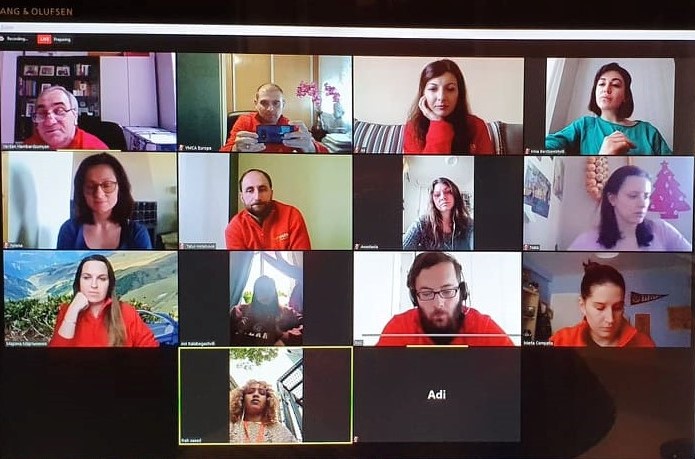
The online Reunion of Roots Peace Work Institute Alumni was the first ad hoc activity in this regard, – 14 participants from 8 countries got together in online space via Zoom Call on April 3rd, 2020 to reconnect, check on each other and elaborate ideas and plans for joint actions in the future.

Facilitated by the Roots Team, the Online Reunion turned out to be quite successful endeavor with all the participants actively engaged and contributing with various suggestions and ideas:

  • To create “the marketplace” of tools and know-how for effectively dealing with current global situation (in the fields of Education, Fundraising, Mental Health, etc);
  • To use existing group capacity for joint sustainable actions for the future;
  • To step up engagement and presence of young people in online outlets towards influencing ongoing processes and subsequent decision-making;
  • There must be other actions apart from Online Space – prolonged and exclusive use of digital resources as only means of interaction with the outside world are already proving to be  counter-effective;
  • To come up with specific initiatives for providing the assistance to the most vulnerable and affected segments of respective communities;
  • To create the “working groups” each focusing on specific fields of engagement – feeding into the overall Roots project;
  • To stay connected & make such online encounters regular – for sustaining relationships, exchanging ideas and complementing each other.

The reunion was recorded to be viewed by other PWI Alumni that were unable to tune in due to various objective reasons. As unanimously agreed and if the current extraordinary situation persists, online PWI Alumni reunions will become regular and will have a more subject-focused approach for the future – Until…. We shall overcome and emerge stronger as individuals and the Roots, – making the difference when and where it’s needed!

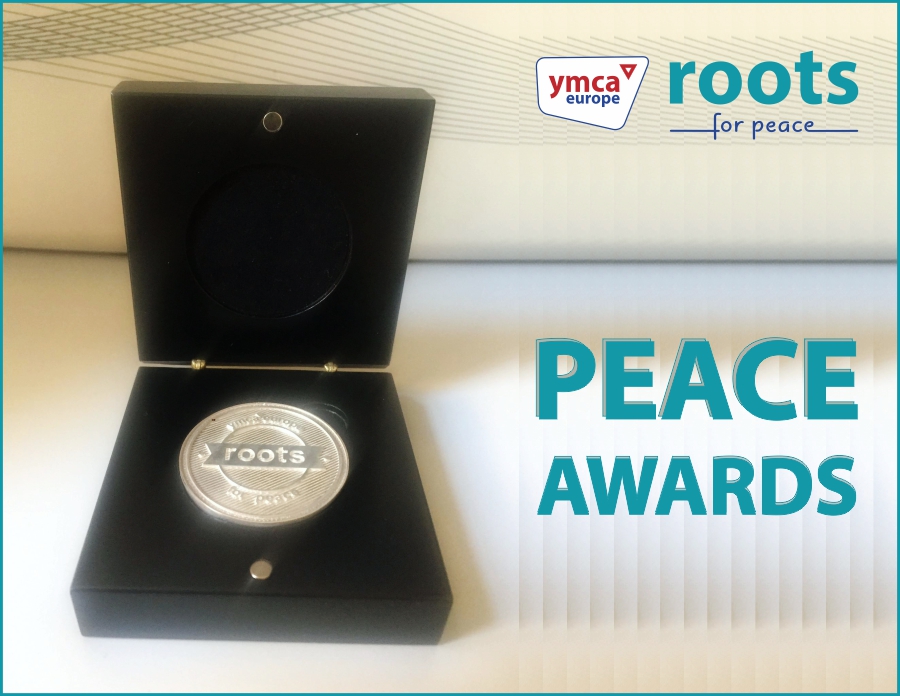
Roots Peace Award 2020 Winners

Inaugural Year of YMCA Europe Roots Peace Award has the first laureates – after highly engaged and participatory process, the YMCA Georgia and European Union were selected to receive it for 2020!

From the very start in 2007 constant innovation and reaction to emerging needs of beneficiaries has been the blueprint of the Roots.

The fourth implementation phase (2020 – 2022) is no exception from adopted approach – along with proven and acclaimed project components as Peace Work Institute & Programme Festivals, the new concept – Local Capacities for Peace Award has been introduced. It envisaged allocation of 10 000 Euros annually to partner YMCA and non-YMCA organizations of Roots for Peace (hereinafter “Roots”) upon submission of project proposals that aim towards tackling the issues and topics related to peacebuilding and conflict resolution across the European continent. The process is competition-based with several eligible entries considered and one Award recipient per year identified via online voting by exclusively Roots Peace Work Institute Alumni.

Four applications were submitted in 2020 by YMCAs of Georgia, Artsakh, Ireland and Ukraine.

The voting process coincided with the alarmingly rapid spread of COVID-19 across the continent, when the primary concern of everyone was obviously focused on the safety and well-being of their loved ones and when it is objectively difficult to concentrate on anything else, therefore it was even more inspiring to see very active participation to the voting process for the Roots Local Capacities for Peace Award 2020.  In total, 40 votes were cast out of eligible 46, which made the response rate stand at 87%. It once again demonstrated the commitment and belonging of each Peace Work Institute Alumni towards the Roots and we are very grateful for and proud of it!

Of course, and again – we thank all four organisations that submitted the proposals and appreciate the energy and commitment invested in developing them. Each of them was a relevant initiative and we hope to see them implemented at some point – ideally within the Roots.

But there can only be one winner per year, and it is our great pleasure to announce and congratulate the one in 2020 – YMCA Georgia! The proposal – “Roof for Roots” obtained 20 votes, followed by 9 votes for both YMCA Artsakh “Camp for Peace” and YMCA Ireland “Y Critical Peace Praxis” projects. It is important to highlight that the proposal from YMCA Georgia received 16 external (non-Georgian) votes.

YMCA Europe Roots has enjoyed outstanding partnership and cooperation of YMCA Georgia since the very beginning of the project. So, let’s wish “Roof for Roots” successful implementation!

As part and parcel of the Roots Peace Award process, the YMCA Europe Executive Committee has decided upon the recipient of the inaugural (non-financial) award 2020, which is set to go to pan European institutions for their outstanding contribution to peace, reconciliation and well-being across the continent. It is the European Union for this year. The creation of the European Home remains an unmatched peace project, which we believe in and hope that endures these times of troubles.

Y CRITICAL PEACE PRAXIS by YMCA IRELAND

1. With maximum 500 words demonstrate the organisation’s contribution specifically towards YMCA Europe Roots for Reconciliation project. Let us know what do you think was that unique footprint of your organisation that enriched the Roots so far, and now deserves due appreciation.

YMCA Ireland and YMCA Kosovo have a strong tradition of peacebuilding in their local and national contexts. Participation in Roots has enriched these efforts and opened new opportunities. The capacity of both movements has been enhanced as young leaders have taken their transformative experiences through Roots events and Tandem projects and applied their learning and experiences into more strategic and peace focused thinking and practice. The relationship with Roots has been a valuable partnership. Key leaders from both movements have invested time, energy and resources in the Roots vision.

YMCA Kosovo took the lead on a remarkable Tandem Project – Bridges for the Future. This pan-European project equipped a generation of YMCA leaders with a vision for peace both within and beyond their borders. The social media and short film outputs provided visibility for the YMCA Europe Roots project. Alongside these tangible outputs, YMCA Kosovo helped elevate the priority of Roots among participating movements within the region. The programme and the input of the World Alliance showed that young leaders could host peace projects and more importantly those who had been prepared and trained but were also offered a platform to lead could do so! This tandem project not only was selected as best practice of the Council of Europe but further further built on the recognition and credibility of Roots.

YMCA Ireland has benefited immensely from the partnership with Roots. The current Chairperson of YMCA Ireland credits participation in Roots events as a catalyst for further engagement with his national movement. The confidence and leadership skills gained through Roots helped him and others take on leadership positions within their national movement that they would not have otherwise taken. In return, YMCA Ireland have been a critical friend to Roots, for instance during the evaluation event. They have also offered their skills, knowledge and experience gained through 25+ years of conflict resolution and peacebuilding work in a (post) conflict society. This has been YMCA Ireland’s footprint through Roots that has scope for more imprints to be made as we move forward together.

Following the relationship developed through Roots, leaders from YMCA Ireland, Kosovo and England aspired to continue equipping young leaders within their movements with enhanced youth work and peacebuilding skills. The result was an Erasmus+ funded trilateral training exchange. While this was not specifically Roots, recognition is given to Roots as the platform through which the Erasmus+ project germinated. For YMCA Ireland and YMCA Kosovo there are limitless opportunities to enhance the work of both movements connecting around a shared vision of youth work pedagogy and peacebuilding praxis.

With the emergence of this new phase of Roots and a mechanism to fund participating movements, YMCA Kosovo and Ireland are eager to partner with Roots once again to build upon the foundations and add another generation of Peace Builders to the impressive talent pool.

Check out the link to partnership blog about the Roots: click to open

2. With maximum 500 words elaborate on the concept of the project, which you plan to implement if awarded. Let us know how far that project promotes peace and whether it is in line with YMCA Europe Roots’ theory of change and what innovation it offers. Please indicate clearly who are the target group(s) benefiting from the initiative.

Every generation of young leaders must grapple with the question “what does peace mean for us?” This is the starting point for the vision for our “ Y Critical Peace Praxis” Peace Award project. Having had leaders trained and equipped through Roots, we want to utilise their expertise by inviting them to take a lead on learning exchanges between the next generation of staff and volunteers within our movements.

Drawing on the Roots theory of change model, our project emphasises change not only at the individual level but at organisational, governmental and societal level. Those involved in the learning exchanges will form a critical mass who will use their platforms within and beyond the YMCA to advocate for learning and resources developed through the project to be applied in local, national and international work.

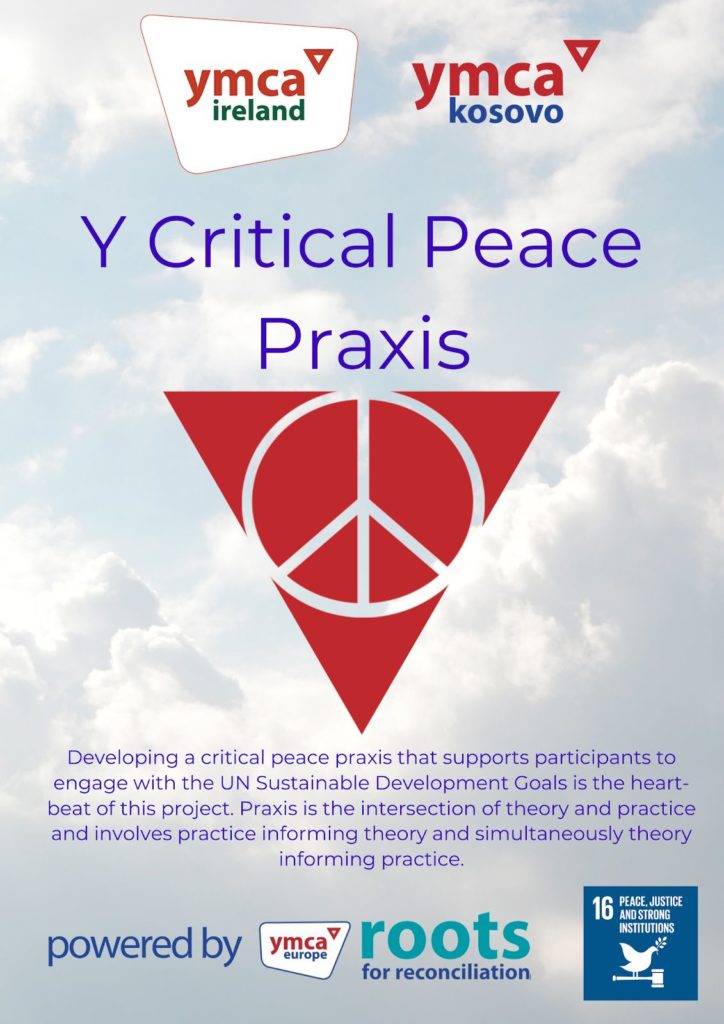
Developing a critical peace praxis that supports participants to engage with the UN Sustainable Development Goals is the heart-beat of this project. Praxis is the intersection of theory and practice and involves practice informing theory and simultaneously theory informing practice.

To have a meaningful impact the project will enable participants to interact critically with the theory and practice of peace work in community and youth work settings. The RfR Peacework Guidebook will be a fundamental resource to support this learning. Out of this will emerge new ideas and ways of defining and measuring peace outcomes.

The work of critical peace scholar Oliver Richmond is valuable here. Richmond conceptualises “4 generations of peace work” that have evolved and become more sophisticated. These iterations of peace work are:

  • 1st Generation: Conflict management – The emphasis here is on keeping the peace and curtailing violence. It is indicative of Galtung’s notion of “negative peace”.
  • 2nd Generation: Conflict resolution – The emphasis here is on addressing the root causes of conflict and unmet human needs. Galtung’s notion of “positive peace” comes to the fore here.
  • 3rd Generation: Peacebuilding – This develops the conflict resolution work and represents more joined up thinking across top-level, middle level and grass-roots leadership to work towards peace and social justice.
  • 4th Generation: Everyday critical peace – This challenges the idea of prescribed peacebuilding outcomes from the top-down level that characterises the 3rd generation peacebuilding approach. It advocates a reversal where the grass-roots level identify and articulate meaningful peace outcomes for their context.

This innovative work will be presented to relevant government departments to inform policy and will strengthen the capacity of both YMCA movements having an impact far greater than simply the individuals involved. In this way the project will promote SDG number 16 – Peace, Justice and Strong Institutions.

The project is a bi-lateral exchange with Phase 1 in Ireland and Phase 2 in Kosovo. The mediums through which this work will be done is threefold and represents three key strands of the project:
(i) Youth work for peace
(ii) Outdoor learning for peace
(iii) Film & Photography – Visibility and Impact

Phase 1 will involve 12 staff and volunteers (most aged 18-30) from both movements (6 participants from each) meeting at YMCA Ireland’s National Camp for a week long intensive training on youth work and outdoor learning methodologies for peacebuilding in conflict societies. There will be a focus on SDGs, global youth work and global citizenship. An additional 2 youth reporters from YMCA Ireland will create a documentary of the learning at this phase.

Phase 2 will involve 12 staff and volunteers (most aged 18-30) from both movements meeting at YMCA Kosovo’s National Camp for a week long intensive training on the realities of working in conflict societies, how to define outcomes and measure impact, and sharing learning between both national movements and beyond. An additional 2 youth reporters from YMCA Ireland will create a documentary of the learning at this phase as well as creating an interactive resource using film and photography to promote peacebuilding. A final cut documentary of the entire project will also be storyboarded and created during this phase.


3. Indicate the estimated project budget, and whereby over € 10,000, provide clear information on co-funding sources and guarantees.

Amount requested: 10,000 Euro
Co-funding YMCA Ireland: 6,100 Euro

Total budget: 16,100 Euro

THINK, FEEL, RESOLVE! BY YMCA UKRAINE

1.With maximum 500 words demonstrate the organisation’s contribution specifically towards YMCA Europe Roots for Reconciliation project. Let us know what do you think was that unique footprint of your organisation that enriched the Roots so far, and now deserves due appreciation.

YMCA Ukraine has contributed into Roots for Reconciliation projects through their leaders – the alumnus of Roots for Reconciliation project. Knowledge, practices, methods, networking gained in/through RfR projects are being actively implementing in a variety of current local, national and international projects by our leaders. In their work they use relevant peacebuilding techniques, learnt through RfR, and promote Roots as a very powerful program of training a peace builders. More, than 1000 of Ukrainian children and youth benefited during more than 10 implemented peacemaking projects. Below are samples of an input of Ukrainian “Rooters” into development of RfR program and into promotion of it in Ukraine and other countries.

•    Natalia  Vainilovich, now – National YMCA Ukraine trainer. In the Roots projects in 2017-2018 introduced a new direction – Art for Peace. Natalia held several workshops on the playback theatre during a few RfR events. She was also one of the main trainers at Orange Camp, held by the YMCA Georgia during the ART4PEACE 2018 project, which promoted art as a tool for building peace both at the person-to-person level and at more global levels. The participants were involved in training for the playback theatre and made a performance about the relations between countries that are in a military conflict. It helped to recognize each other’s feelings and create a warm trust atmosphere of mutual understanding and sharing common pain. Natalia is an author of an article “Art for Peace” in “Peacework guidebook”, a RfR manual, where she described  theatrical techniques and practical exercises that can be applied in different social contexts.

·  Yana Bakalenko, now – the President of YMCA Kyiv, national trainer, participated in Peace Work Institute Reunion 2019, assisted with project evaluation – interviewed participants. Yana and Nataliia Vainilivich, using the RfR experience, have prepared a guide for the leaders of the children’s camps “Peace Day at the Camp”.

Yana was one of the initiators and key leaders of a Project “Impulse for Intercultural Dialogue”, 2018. This project, created by the PWI participants from YMCAs of Russia, Belarus, and Ukraine, was focused on the extension of cross-border dialogue, exchange of program and cultural experiences, and setting a solid foundation for long-term collaboration between young people from the three national movements. As a result young people raised their cooperation and team-building skills; learned about leadership development and personal growth methods, etc, with the main purpose to put the acquired skills into practice on the spot and elaborate joint ideas of future cooperation.

•    Yuliia Polyvla, a participant of the RfR events and Reunion in 2015 as well as a leader of the Ukrainian group for the RfR ProFest in 2015. Yuliia implemented the idea of peace and critical thinking through two successfully realized projects:

1) Peace Camp operated by YMCA Kyiv each year from 2015 till now. The camp include peacebuilding education, sport, scouting, arts, crafts, drama, dancing workshops and trainings on leadership, communication, children’s rights, environmental protection. The idea that every child was heard and understood; and peacebuilding and social integration were promoted too. For the last five years, more than 500 kids from difficult background participated in the camp.

2) “Path to Peace: Responding to the needs of young people in Ukraine”: a response to the tragic events in Ukraine in 2014-2015 (aggression of the Russian Federation against Ukraine: illegal annexation of Crimea and occupation of the part of 2 regions of Ukraine in the east), aimed to create a network of peacemakers of internally displaced youth and local youth, empowering them to develop their projects promoting peace. The project was supported by the European Youth Foundation and 30 young people from different regions of Ukraine participated.

•    Maksym Studylko, YMCA Vinnitsa board member, admitted methods he learned from “Roots For Reconciliation” as very beneficial in making changes in his city namely in work with internally displaced people, citizens from socially unprivileged groups, who suffered from human trafficking etc.  Digital activism is one of his favorite themes while being a participant of PWI. “Do no harm” is a basic approach based on human rights, conflict management, SDGs that I use in camps, festivals, NGO, in my daily life” – he noted.

2. With maximum 500 words elaborate on the concept of the project, which you plan to implement if awarded. Let us know how far that project promotes peace and whether it is in line with YMCA Europe Roots’ theory of change and what innovation it offers. Please indicate clearly who are the target group(s) benefiting from the initiative.

“Think, feel, resolve!” is a project aiming to make young leaders more conscious about the roots and nature of conflicts, as well as to give knowledge and tools on how to do peaceful communication and solve conflicts at personal and group levels.

Young people all over the world are actively involved in many conflicts because of different negative factors: discrimination, violence, lack of opportunities, break of human rights and many others. Additional negative factor in Ukraine is that around 1 million 600 thousand Internally Displaced People (IDP) had to move from the Eastern part of Ukraine, were war actions are going on, and from Crimea, illegally annexed by Russia. These people have to be integrated into the life of the hosting communities and this is a hard path to walk.

Even after a few years there is still a tension between the hosts and newcomers.  Rising radicalism, hostile attitude between young people, fake information on different issues of social and economical life are the obstacles to harmonic relationships and democratic development that have to be overcome through peaceful communication, respect and mutual understanding. Young people need to be reminded that peacebuilding is the only way we can use to prevent excluding people from society due to their specific place of birth, language, religion or other differences. All described events had a significantly precarious effect on current social situation in Ukraine too namely lacking of non-violent communication, respectful attitude, not being able to reduce emotional tension in crisis among youth, which is extremely vital for stable civil society.


“Think, feel, resolve!” promotes a holistic approach to conflict resolution: how to use critical analyzing of information; with consideration of people’s emotions, attitude and personal experience; how to prevent conflict (using “Do no Harm” and “No Hate Speech” methods), what to do for peaceful conflict solving. The way conflict is developing depends on personal perception of a conflict situation, on specific respond/actions people make. Therefore, a non-biased peaceful attitude may be shaped and new strategies of solving problems can be created among youth.

Young leaders have to be capable to react correctly and to overcome conflicts in their personal life and in community. Participants and other youngsters will learn through innovative effective tools, such as Playback Theatre, Digital Activism and other methods of non-formal education, about peacebuilding technics, tolerant attitude and, as a result, how to create respect to each other and keep calm friendly atmosphere, using empathy, words and through actions.


Format: 4-days training session, applications contest and mini-grants implementation.


Target group:  the first stage of the project will be National Training the Trainers for volunteer leaders of 18-30 years old to give them deep knowledge and tools on conflict resolution issues. They will share gained knowledge and skills with their peer on the local level, will use in the activities of their local YMCAs and in the local communities to prevent conflicts and/or to solve them if they appear. As a result, a network of young peace builders (around 100 young people) will be created who will exchange their experience and help each other and people around in conflict resolution if needed.

Participants of the Training the Trainers: 25 (21 young leaders, 3 trainers, 1 project coordinator)

Teaching a conscious approach to peaceful communication / conflict resolution will consist of three components:

  1. Critical thinking: skills to analyze information, separate facts from opinions, work with beliefs;
  2. Emotional intelligence: ability to recognize your and others emotions, to understand the cause of emotions and how to control them, to increase empathy. Instrument – interactive theatre (Playback theatre, elements of the Oppressed theatre, game improvisation);
  3. Conflict resolution: learning tools for the peaceful resolution of conflicts, as well as the typology of conflicts, the basics of mediation.

After 4-day training, young leaders from different local YMCAs will take part in a contest of mini-grant applications. The 3 projects-winners will be identified and implemented, focused on prevention/solving of conflict situations (for example, bulling in school or other) in the local communities.  The mini-projects will include trainings on peace building issues with local youth, round tables with involvement of the local authorities, publications in the social networks and local mass media on the issues of peace building. In total around 100 children and youth will be reached during the mini-projects implementation.


Plan on project implementation:

  • August: Preparation of advertising and methodological materials;
  • September: Presentation of the project at annual YMCA Ukraine Conference;
  • October: 4-day trainings on 3 topics. Announcement of mini-grants contest;
  • November: 3 winners implement mini projects on conflict resolution, non-violent communication;
  • December: Summing up, producing of reports.


3. Indicate the estimated project budget, and whereby over € 10,000, provide clear information on co-funding sources and guarantees.

Amount requested: 10,000 Euro
Co-funding YMCA Ukraine: none

Total budget: 10,000 Euro

ROOF FOR ROOTS by YMCA GEORGIA

1.With maximum 500 words demonstrate the organisation’s contribution specifically towards YMCA Europe Roots for Reconciliation project. Let us know what do you think was that unique footprint of your organisation that enriched the Roots so far, and now deserves due appreciation.

YMCA Georgia may not be the oldest and the strongest organization in the region or among other Ys, but it has always been trying to bring the peace into Georgians lives. Since the day it was created, it has been trying to make life easier for our citizen and help them solve their problems.

In 2007 we joined YMCA Europe initiative “Roots For Reconciliation’’ and our effort to strengthen peace in our society became even stronger. Since then YMCA Georgia has not only being trying to build peace in Georgia, but we have been actively involved in international projects. Georgia was represented during both, 1st and 2nd generations of peace work institute. In 2015, one of the most memorable Pro-fest took place exactly in our beloved Camp Orange. People from 5 different countries celebrated peace and with all the energy and resources that we have put into this festival, it turned into such a worthy closing ceremony of the first generation of PWI and real celebration of peace, that even after 5 years participants can’t hold their emotions while remembering it.

As they say, good start is half done job. In 2017 year second generation members of PWI gathers for the first time in Tbilisi and embarked on a new journey to peace. We created free, friendly space for people from about 16 countries. Giving them all the needed resources that later contributed to various successful tandem projects. Later in the same year, in July Georgia opened its doors for the rooters for one more time and hosted another very successful program festival again in Ureki, Camp Orange as a celebration of successful start of the new PWI and new ideas that could lead us to peace.

As mentioned above, there were tandem project implemented on behalf of roots. In 2018 “Art 4 Peace”, one the most significant roots project took place again in Georgia. We welcomed people from different conflict countries at our home, Camp Orange and gave them opportunity to get to know each other, destroy stereotypes, build friendships and create peace together.\

Finally, in 2019 we became even more global, started spreading peace ideas beyond European and Asian borders and invited people from the USA in Ureki to participate in C.A.M.P. (Create! Act! Make! Peace!) The goal was to promote peace on behalf of RFR and deliver our voices to more people. This idea worked, project together with the USA was productive and our ideas, planes and hopes about peace have reached far places, far across the oceans.

Finally, its’s high time we mention Camp Orange itself as it is great contribution to peace and RFR. Since the day it was built up Georgian group was trying its best to turn this place like a real home. As a result, now our camp Orange is standing proudly, providing safe and warm space for those in need. It has been open and welcoming for everyone, no matter what was the political or social situation, even for those who had closed the door for us, or it was a hurtful time. It was a shelter and a guaranty that great plans would not stay as just plans and there was always a friendly roof for roots. It is result of time and effort of people, who care about those walls, who put their own life on the background and dedicate their time and energy to this place, so it will always be a safe place for those, whose way of life is towards peace.

During all the project mentioned above Georgian group worked hard to create comfortable space for people from different conflict countries, which was not easy, but the goal was reached. Many walls were destroyed and bridges were built during those days and we are proud and humbled to be hosts of all these amazing events. Georgia is proud to have hosted the most Roots events and what we are even more proud of is the fact that lots of strong and lifetime long friendships have been born in here, with us.

2. With maximum 500 words elaborate on the concept of the project, which you plan to implement if awarded. Let us know how far that project promotes peace and whether it is in line with YMCA Europe Roots’ theory of change and what innovation it offers. Please indicate clearly who are the target group(s) benefiting from the initiative.

Georgia is a small country on the crossroad of Europe and Asia. It can be surprising that even though our country has population of only 3.7 million, still a lot of members of different ethnic minority have been living here for decades or even centuries. Some of these minorities are Arzebaijanis, Armenians, Russians, Ossetians, Yezidis, Ukrainians, Kists, Greeks, Assyrians and so on. One can definitely be proud of living in such multicultural and multi ethnical country, but we cannot avoid mentioning social distance and self-awareness problems that come together with it.

Problem Social Distance – interaction between different groups living in one society. Despite of the fact that Georgia is really welcoming country, minorities still struggle in regards of being fully integrated in Georgian society. For example, study of Caucasus Research Center shows that ethnic Georgians prefer creating business or family ties together with again ethnic Georgian rather than members of different ethnic minorities. Also, about 88% of members of ethnic minorities say that they fell discrimination from the majority and they feel like second class citizens, however 71% of Georgians have never noticed that minorities have some problems in this regard. This indicates on low level of interaction.

As mentioned, there is a gap between Georgian and minority societies, still the gap is bigger between members of different minorities. Despite of the fact that everyone lives in peace on this territory and they don’t have conflict, still level of communication between them is very low. Also they have different religions and cultures that can create misunderstanding between groups that do not know much about each other’s needs, wants and believes.

The problem in regards of self-awareness is that members of ethnic minorities often struggle finding their own place in the society. This problem shows up when members of small community mix together with bigger group and they try to fit in. there have been cases of hiding own last name that indicate on belonging to ethical minority while registering on social network platforms. Does not even worth mentioning how much harm artificially changing identity can bring to a teenager who is just about to start serious life.

The way to solve this problem is helping members of different ethnic groups to get to know each other and themselves as well. Therefore, we designed a project “Roof For Roots” that aims strengthening tolerance in the citizens of Georgia by understanding more about different cultures. Helps members of different ethnic group to build pride towards their ethnic identity, contributes to integration of small groups in the society and become ambassadors of their community as well.

Project beneficiary will be teenagers from 16-18 from ethnic minorities as well as ethnical Georgians in total 60 teenagers. This is the period of life when we start questioning our identity and start constructing our future life. Participants from different ethnic groups will live, work and learn together. Special programs that will help them bond as a group and build strong friendship will be created by our team.

Duration of the camp will be a week for one cohort, followed by follow up programs and projects. As a result, we will reach hundreds of teenagers in different regions of Georgia.

We believe you can only create peace, when you are in peaceful in yourself and in your closest environment. It starts from individuals and the one who wants to bring peace to people must find peace in oneself first. This is achieving by constant working on self-development and getting to know yourself, accepting and loving yourself as you are.

After the project we will have reached supposed results that are raised tolerance between members of different groups, developed self awareness, new multicultural friendships, confidence new generation and that are well aware of their need and wants; they will learn how to love, respect and accept themselves and each other for who they are and will be able to build healthy mind body spirit. All these contribute to building of strong, peaceful community where everyone feels like at home.

3. Indicate the estimated project budget, and whereby over € 10,000, provide clear information on co-funding sources and guarantees.

Amount requested: 10,000 Euro
Co-funding YMCA Georgia: none

Total budget: 10,000 Euro

CAMP FOR PEACE by YMCA ARTSAKH

1.With maximum 500 words demonstrate the organisation’s contribution specifically towards YMCA Europe Roots for Reconciliation project. Let us know what do you think was that unique footprint of your organisation that enriched the Roots so far, and now deserves due appreciation.

YMCA Artsakh has been working in Artsakh (Karabakh) since 2004. The main fields of the organisation are:

  • Conflict transformation;
  • Peacebuilding;
  • Summer camps;
  • Non-formal education;
  • Cultural projects;
  • Environmental protection

Artsakh is a conflict region in South Caucasus. Despite the official cease-fire signed in 1994 with Azerbaijan, the clashes in the contact line have never ceased. For about two decades, politicians and policymakers didn’t succeed to improve the situation in the region.

There are very limited opportunities for young people in Artsakh and very few international organizations work in the region due to the difficult political situation. YMCA Artsakh is a youth organization with long-term experience and a high reputation in the community offering signature programs and providing a safe space for their implementation. Due to its hard work and the impact made, YMCA Artsakh has obtained the trust of the community members, especially the youth and has the support of the local and national government.

  • YMCA Artsakh, YMCA Armenia and YMCA Georgia are co-founders of the ‘’Roots’’.
  • RfR is the only project working with YMCA Artsakh, because of the political issues. The organization doesn’t have any other financial support.
  • 2007-2009 there was RfR reunion organized in Shushi, Artsakh. The participants were from Armenia, Georgia, Russia (injured children from Beslan terror act) and other European countries.
  • In 2013 in frames of the ‘’Roots’’ there was Program Festival organized in Shushi, Artsakh.
  • In 2014 in frames of the ‘’Roots’’ a Study visit to Artsakh for the participants of the PWI.
  • In frames of the RfR, YMCA Artsakh implemented 3 summer camps. These outdoor camps with about 100 people each, due to the financial support of the RfR Local Capacities for Peace Seed Grant Tool camps were a success. The main topics of the camp’s educational part were conflict transformation, conflict analysis, negotiation skills and peace work.
  • YMCA-Artsakh was also involved in ‘’Peacework institute’’ of RfR project. The head of the YMCA-Artsakh David Melkumyan and the leaders Vova Ghulyan and Anzhelika Zakaryan were the graduates of the PWI. Another 6 volunteers took part in the local projects (‘’Art for Peace’’ camp in Georgia, Ureki).
  • In 2019 in frames of the ‘’Roots’’ there was Programme Forum organized in Stepanakert, Artsakh.
  • In 2019 an agreement of partnership between YMCA-Artsakh and YMCA of Glendale was signed.

2. With maximum 500 words elaborate on the concept of the project, which you plan to implement if awarded. Let us know how far that project promotes peace and whether it is in line with YMCA Europe Roots’ theory of change and what innovation it offers. Please indicate clearly who are the target group(s) benefiting from the initiative.

The goal:

The aim of the project is to enlarge the number of young people interested in peacebuilding. We understand that traditional armed wars in the 21st century are accompanied by wars on virtual platforms and they should be managed respectively. Demonization, hate speech, catchy slogans, provocative propaganda, not true or falsified information and the combat against all these negative phenomena intensify with the development of information and communication technologies. But we strongly believe that every conflict has to come to an end one day and we believe in the great role that the younger generation plays in this.


What and how:

Based on the above-mentioned arguments, YMCA Artsakh will be running another outdoor camp in the village of Patara. The “Camp for Peace 2020” should be the logical continuation of the previous 3 camps. The working group will comprise of the leaders from Armenia and Artsakh. The key is that they are the alumni of the PWI.


The main components of the camp will be:

  1. Educational (training and workshops) part
  • Conflict transformation
  • Peace work tools
  • Negotiation skills
  • Critical thinking
  • Media awareness
  • Democratic and civil society
  • Project writing2. TenSing and Cultural component
  • YMCA TenSing component will target at developing the campers’ creative thinking. TenSing has always been a strong side for YMCA Artsakh and several Musical Festival events have been implemented, namely in Shushi in 2007, 2008 and 2009 in frames of the RfR project first phase.

3. Sport activities

  • As volleyball was invented in frames of the YMCA, this year we decided to make a big game with all the teams and at the end have a champion team of the YMCA-Artsakh camp in volleyball.

When and where:

In order to achieve the goals and objectives set, YMCA Artsakh is planning to organize a youth camp at the end of July (probably, the last week), 2020. The camp will take place in the campsite of the village of Patara which is a great place for an outdoor camp with a well-built infrastructure and a great surrounding nature in the forest.


Who:

We plan to host up to 100 participants.

  • YMCA-Artsakh leaders
  • Volunteers
  • Participants (18-30 years) from different regions of Artsakh including the border communities.

Living all their life in a conflict region, hearing about their fathers injured/died in a war, and then, in 2016 passing this way themselves, makes a bit difficult for people to believe in peace and reconciliation.

These young people have few opportunities to get closer to peacebuilding, many of them are also from socially vulnerable families and have no opportunities for a good education. Some of them are from border communities and everyday struggles in inner and outside war, and the possibility of peace is being forgotten… This is why these youngsters are in need of YMCA!


3. Indicate the estimated project budget, and whereby over € 10,000, provide clear information on co-funding sources and guarantees.

Amount requested: 10,000 Euro
Co-funding YMCA Artsakh: none

Total budget: 10,000 Euro