Be a voice, not an echo

YMCA EUROPE ROOTS PEACE AWARD – CALL FOR APPLICATIONS

In its pursuit to sustain and enhance peace-building initiatives across the continent YMCA Europe is pleased to announce its first call for the Roots Peace Award.

This initiative is part of YMCA Europe Roots for Peace project, with Brot fur die Welt Germany as its key funding partner.

YMCA Europe member and cooperating organisations are invited to submit applications to receive the Award of € 10,000.


In doing so, the applicant organizations are expected to:

  1. With maximum 500 words demonstrate the organisation’s contribution specifically towards YMCA Europe Roots for Reconciliation project. Let us know what do you think was that unique footprint of your organisation that enriched the Roots so far, and now deserves due appreciation.
  2. With maximum 500 words elaborate on the concept of the project, which you plan to implement if awarded. Let us know how far that project promotes peace and whether it is in line with YMCA Europe Roots’ theory of change and what innovation it offers. Please indicate clearly who are the target group(s) benefiting from the initiative.
  3. Indicate the estimated project budget, and whereby over € 10,000, provide clear information on co-funding sources and guarantees.
  4. Provide a piece of visual material (free style) exhibiting your case for further use in YMCA Europe Roots online platforms.

The applications have to be submitted by February 28th, 2020, through email to YMCA Europe Executive Secretary – Vardan Hambardzumyan.


The shortlisted applications will be nominated for final selection through online voting exclusively by YMCA Europe Roots Peace Work Institute Alumni by March 20th, 2020.

The award ceremonies will take place within YMCA Europe General Assemblies: this year in Brussels (May 21 – 24).

During the following two years (i.e. 2021 – 2022) the laureate organisation will not be eligible to reapply for the YMCA Europe Roots Peace Award.


Disbursement of the Award funds is subject to a formal agreement to be signed between YMCA Europe and laureate organisation, assuming the following responsibilities for the recipient organisation:

  • As part of the contracting process provide YMCA Europe with implementation plan, timeframe and budget breakdown of the granted project.
  • Upon the completion of the project provide YMCA Europe with a narrative report, including the list of participants, summary evaluations (if available), and visual (video, photo, publications, etc.)  materials.
  • Upon the completion of the project to provide YMCA Europe with financial reports, incl. the proofs of expenditure (receipts, checks, etc.) and/or audit resolution.
  • Ensure the visibility of Roots for Peace Project with the YMCA Europe Roots logo, as well as the reference to the Roots Peace Award appear on any document, publication, website, etc. linked to the project.
  • The 75 % of the award sum will be disbursed prior to the planned activity; the remaining 25 % will be released to the implementing organization only after the fulfilment of the above-mentioned requirements.

REFLECTING ON PEACE PRACTICES WORKSHOP IN BRUSSELS

On December 08 – 12, 2019, the last activity within YMCA Europe Roots for Reconciliation project current 2016 – 2019 phase took place, bringing together 24 key-stakeholders from 15 countries. It was a strong manifestation of unity and fellowship by itself – supported by content and narrative of the workshop. 

Presentation of the Roots Reflecting on Peace Practices Report and the served as the major program highlights, showcasing the tremendous work and impact that the project has had for engaged individuals, organizations and communities in spreading the message of peace and reconciliation across the continent and beyond. 

The visit to European Parliament and meeting with Andor Deli, MEP (Member of European Parliament) from Hungary exposed the participants with the reality and challenges that European Union is currently going through, and underlined the significance of sustaining the principles of cooperation, solidarity and active citizenship as major pillars upon which the future of Europe is based.

ROOTS | RPP Workshop

As YMCA Europe prepares for the new Strategic Plan for 2020 – 2024 period and with number of member National YMCAs present, the workshop provided a very useful platform to discuss and analyze the main components that the Plan is anticipated to focus on. The obtained feedback will certainly feed into the final document to see the light next year. 

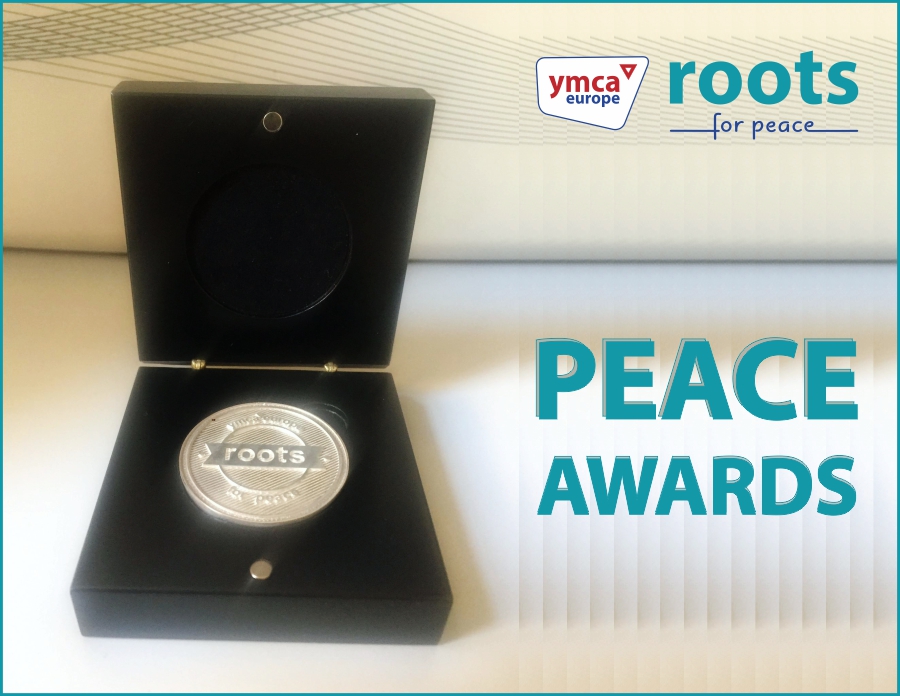
Roots participants and volunteers have always been the driving force and catalyst for its success. And it was the right place and moment to acknowledge some of them. Adrian Davies, Antonio Merino and Palmer Hestlley were awarded with “Roots Peace Medals” for exceptional support and commitment to the project.

It was also in Brussels where the good news was officially affirmed and signed – the Roots is set to continue for 3 more years thanks to our long-standing partners – with continued support from Bread for the World as main donor and in close cooperation with CVJM Germany World Service! Another opportunity, privilege and responsibility to keep doing what we all firmly believe in – Peace is the Way!

ROOTS HAS PUBLISHED ITS OWN PEACEWORK GUIDEBOOK!

Published as YMCA celebrated its 175th anniversary and subtitled ‘Peace Roots: From Seeds to Fruits’, our Peacework Guidebook is:

  • A reflection on the Roots history and development, key components and activities;
  • A testimony  of Roots participants’ impressions about the project and its impact on their lives;
  • A comprehensive summary of the unique know-how and all the tools that have been fundamental to the Roots’ peace work success;
  • A treasury of valuable references for peace practitioners and activists.

. It has six parts.

Part one begins with a case study based on the Roots for Reconciliation Project peacebuilding experience. It focuses on the project’s best practices and know-how, particularly its Peace Work Institute. We hope it will inspire individuals, organizations and institutions interested in and – more importantly – implementing conflict transformation and peacebuilding projects with young activists worldwide to learn from our Europe-wide practice.

In the second part, the Guidebook offers an overview of the knowledge and skills the Peace Work Institute participants acquired and later applied in cross-border ‘homework’ projects of their own design. These projects were implemented in their own regions and communities, using their own resources.

While the third part shares the Peace Work Institute participants’ and stakeholders’ personal stories, part four provides a brief statistical overview of their learning, activism and professional journey.

The Guidebook ends with a comprehensive list of resources with references to practical training and activity tools used in the Peace Work Institute curriculum design and implementation.

In the words of Nelson Mandela: “It always seems impossible until it is done!” The Peace Work Institute people – its participants, staff and various contributors – are living proof of these inspiring words.

We hope this Guidebook will inspire its readers to action. Feel free to share it and let us know about your experience with it.

ROOTS HAS PUBLISHED ITS OWN PEACEWORK GUIDEBOOK!

Our Reflecting on Peace Practices Workshop in Brussels this December featured a special event: presentation of the Roots  – a practical inspiration for action, based on the Roots for Reconciliation 2012-2019 Project peace practice legacy.

Learn more

REFLECTING ON PEACE PRACTICES WORKSHOP IN BRUSSELS

On December 08 – 12, 2019, the last activity within YMCA Europe Roots for Reconciliation project current 2016 – 2019 phase took place, bringing together 24 key-stakeholders from 15 countries. It was a strong manifestation of unity and fellowship by itself – supported by content and narrative of the workshop.

Learn more

YMCA EUROPE ROOTS FOR RECONCILIATION | PEACE WORK INSTITUTE GUIDEBOOK: CALL FOR GRAPHIC DESIGNER

YMCA Europe is looking for an expert Designer for the Roots Peace Work Institute Guidebook: fluent English is a key requirement. Knowledge of and experience with YMCA activities, especially those dealing with conflict transformation work is an advantage.

Learn more

YMCA EUROPE ROOTS FOR RECONCILIATION | PEACE WORK INSTITUTE GUIDEBOOK: CALL FOR TEXT EDITOR

YMCA Europe is looking for an expert Text Editor for the Roots Peace Work Institute Guidebook: preferably a native English speaker. Knowledge of and experience with YMCA activities, especially those dealing with conflict transformation work is an advantage.

Learn more

LOCAL CAPACITIES FOR PEACE FORUM

YMCA Europe Roots for Reconciliation Local Capacities for Peace Forum took place in Stepanakert (Nagorno Karabakh), with the participation of YMCAs from Armenia, Artsakh, Georgia, Russia & Ukraine, as well as representation from YMCA Europe and external program facilitator from Germany.

It was a meeting to revisit and present respective projects implemented by attending organizations in 2017 & 2018; to receive updates about ongoing Roots for Reconciliation Project Survey & future plans beyond 2019.

There was also a time to meet local officials to hear about the situation in the region and to visit local sights of interest.

Please check out the photo album to see how it all went

Local Capacities for Peace Forum 2019

WHAT ARE ROOTS FOR RECONCILIATION?

ROOTS – this is about who you are. It’s your family and your history, your victories and your pain. These roots go so deep that necessarily intercross with the roots of others – other people, other nations, other countries.

RECONCILIATION – this is about how to deal with your pain and learn to live in peace, firstly with yourself and after that – with your neighbors.


I became part of the Roots in 2012 as a participant of a ProFest “It`s my story” in Karabakh. Since then, there was a row of Roots events in different places on Earth but the questions that had occurred then are only growing in number and still stay unanswered.

Here are some of them:

How do my friends from Armenia, Karabakh, Georgia, Ukraine manage to be so open-minded and positive despite all the challenges they have been facing?

What happens to people after three-four days of conversations, joint meals, walks, songs and games so that they get changed forever?

Why is our knowledge of our own history so limited and narrow-focused and what can we do about it?

In which way should we bring up our children so that they know what war, genocide, deportation is and never allow it happen again?

This is only a small part of my long list of questions. And I feel privileged to be able to raise them in the safest environment possible.

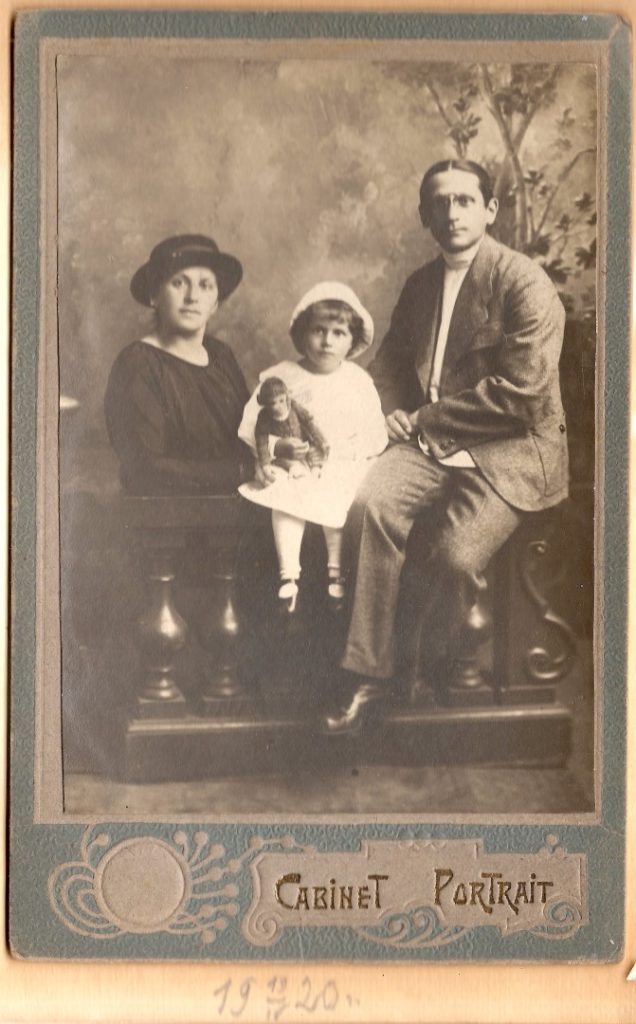
I attach a photo from my family archive as a small part of my personal history and my personal roots. These are my great grandparents with my granny’s elder sister, the picture is taken almost 100 years ago, in 1920.


Tina Larionova, Moscow, Russia

A NEW PERSPECTIVE

When I first meet my dear colleagues from YMCA Slovakia, I was just starting an independent cultural NGO in the same building as they were seated and, at that moment at the very centre of my bohemian life, a Christian non-profit organization crossed my path. That was a real surprise for me as my only contact with this religion was through my grandmother, she taught me to pray and took me to the church while Christmas visits with my other cousins. The preacher´s speech was pretty much the same every year and I never needed more of it in my life. I was respectful to others, I was always helping in case someone needed me, I could forgive, and I was forgiven, I felt loved by the people I loved. While observing some of my friends who claimed to be Christians, I realized the hypocrisy in their lives and trying not to judge I was just not interested anymore.

That changed when I understood what YMCA Slovakia goals are, what did they achieve thanks to their local activities and suddenly I meet people who saw Christianity as active service for the others. That started to break down my prejudice about this religion. Soon it will be 4 years since I started to work with them, and it is hard to find the words to describe how they enriched my life. During this time, I have meet members and YMCA workers from all over Slovakia and from all over the world and no one has ever suggested that I should become a member of their religion. We tolerate each other because we share the most important values.

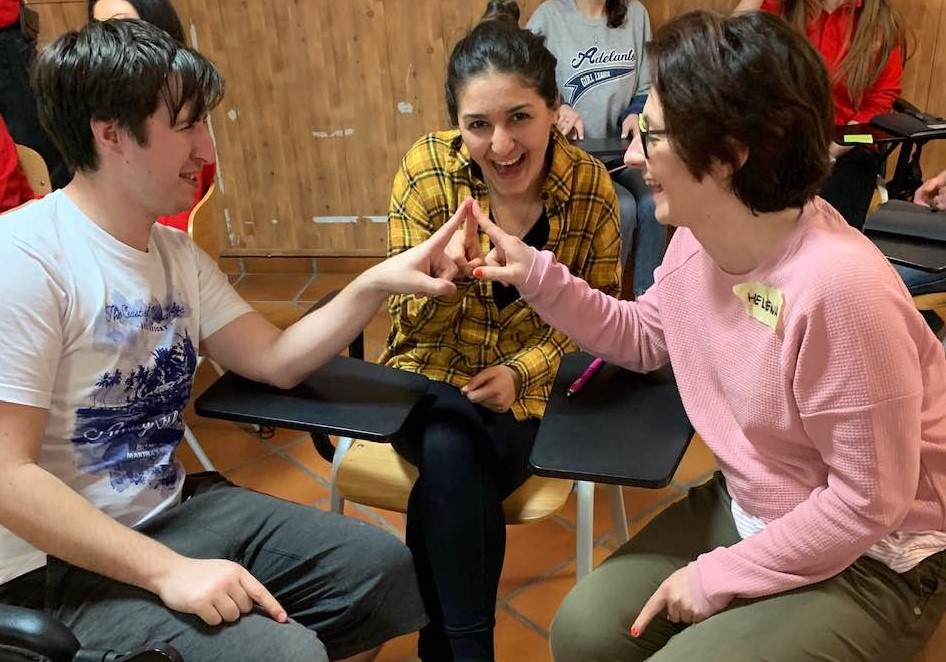
This is something I learned also during my last international (and multireligious) experience with YMCA Europe. I was one of the 40 participants from 17 different European countries gathered for the Peace Work Institute Alumni Reunion. From Portugal to Azerbaijan, from Armenia to Northern Ireland a great bunch of young people, youth workers, and social workers were meeting in order to reflect on their previous meetings. It has been two years since the second round of the project started and participants were discovering peace practices and exchanging good examples of what their organizations were doing. If I should describe these precious moments spent with the participants, this article would never end. I will rather mention the organization team which was responsible for this Roots for reconciliation project since 2012 till now. Vardan, Marius and Rezi with the help of few experts and trainers have put together a functional scheme which brings together people who would otherwise never meet, they made them experience a lot together and it changed their life perspective forever. The structure is designed especially for people from conflict countries. Yes, now why would a Slovak person be interested in such a project, right?

First, I was interested as someone who works with marginalised youth and wants to learn methods on how to bring together groups of people who are ignoring or hating each other. This was my local goal but what I realized just after the project is the global perspective I gained. Being from a non-conflict country gives me a powerful position of stepping up for someone who is from a country whose governments are at war or whatever kind of conflict. We need to explain to our young people that the privilege of living in peace is not granted forever and that we need to take care of it and one of the ways how to do it is to step up for those whose lives and future are in danger. Perhaps then our local conflicts will dissolve in senselessness once the young generation meets their peers who felt the absence of peace on their skin.

Till that happens let me thank again to the organizers and inspirational experts who joined us at all stages of the project for leading me towards the next level in my work.


Helena, Slovakia