Be a voice, not an echo

PEACE WORK INSTITUTE REUNION

And yet, there are some places that leave a deeper mark… And if there can ever be a list of them, I firmly believe that Toledo should be a part of it. The picturesque small town in the heartland of Spain has long been the meeting point of various cultures and ethnicities, a place welcoming for all to meet, create and thrive.

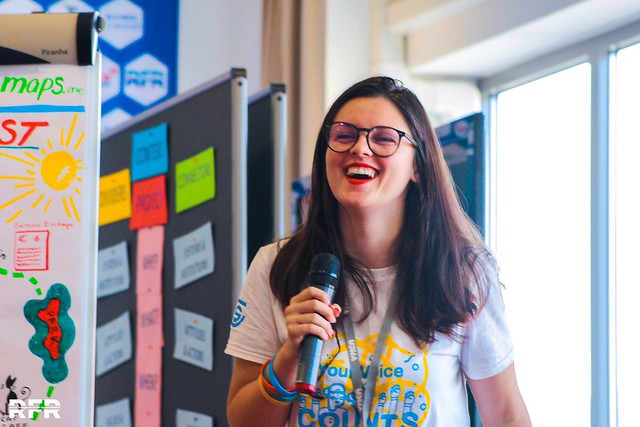
So it comes as no surprise when around 40 participants from 17 different European countries assembled in the medieval castle of San Servando (Now youth hostel run by the regional government of Castilla La Mancha) within YMCA Europe Roots for Reconciliation Peace Work Institute Alumni Reunion. From Portugal to Azerbaijan, from Armenia to Northern Ireland – stretching the continent from all sides they came together – to celebrate their common journey of Peace… 2012 – 2019 was the official timeframe, but this journey has no end once you embark on it…

Workshops run by recognized experts in Do No Harm Methodology; Legendary YMCA Figure – Pip Wilson keeping the energy level always high; Reports and accounts of projects done in the past together; Actions and campaigns to be undertaken in the future – all these were the highlights and duly appreciated, but if to sum it all up in one sentence:

“When you’re lovers in a dangerous time
Sometimes you’re made to feel as if your love’s a crime —
But nothing worth having comes without some kind of fight —
Got to kick at the darkness ’til it bleeds daylight”.

Rarely had I heard something more powerful than these words… And I heard them in Toledo!


Check out the photo album in high definition. Click on the picture below to open.

Peace Work Institute Reunion, Toledo | Spain 2019

GIVE PEACE A CHANCE

I felt a bit privileged to be invited to participate in this Project (“Give Peace a Chance” – ROOTS Tandem Group Project – Istanbul, Turkey) as a guest since I was neither a Peace Work Institute participant, nor a Tandem Group member. As all my fellow friends, I had certain concerns about the visit to Turkey and the Project too since I had already had an experience of an Armenian-Turkish Project with the same participants but held by another organization which was almost a failure. However, as I fully believe and trust in the YMCA in all its initiatives, I am really happy I did join the project and I am grateful for this experience.

I think I would never travel to Turkey all by myself. This project was all about the courage to face reality, tolerance, breaking stereotypes and overcoming barriers. There are specific scenes and faces I carry forward with me from those days and these are very dear memories to me. Unfortunately, sometimes it is extremely hard to put them into words or to share as they are merely pure emotions and feelings and I am not a person who likes talking much about them. What I would like to share with you is my understanding of the whole concept of this project which was regardless of the backgrounds and the whole context, in general, we could have a week full of some concerns from both sides I guess, but also with joy, fun, and love together.

I still remember the fancy dress party day Vardan likes to tell about. I remember it was a lot of fun while we were preparing in our rooms at the hotel. I had my usual clothes on with a fancy hat with some flower decorations that Tatul had managed to grab for me from the theatre dressing room to complete my image. I had not even had time to try the hat on before the day but it fully fit my dressing. I think I looked like an 18-century lady, at least I felt so in this old building.

When I entered the main “ballroom” which was quite large with a rather high ceiling, old and not freshly painted and poorly lit, I could feel the ancient atmosphere and the rich memories those walls carried. I usually enjoy observing people- their gestures, behaviors and I am more into listening to them rather than talking myself. But then I felt numb, hardly able to speak a word and observed the people walking around. I felt as if a ghost, a guest from the past but also a part of the present and it was all due to the hat I was wearing. I could see people dressed in different characters that were like the “blobs” to me as I did not recognize my friends in them but images representing different ages and stories as an example of peaceful coexistence of various epochs and cultures as the whole city we were in. They were dancing all over and I had the motto song of the Project in my mind all the time – “Give Peace a Chance” by the Beatles.

Like Toledo, Istanbul is a multicultural city too and it demonstrates the main condition for human reconciliation and world peace, which is respect to your neighbor and tolerance to differences. Only reaching these two important values both in one’s mind and heart, one can be a peacebuilder. So why not to give peace a chance?

Haykuhi Karapetyan, Armenia

THERE IS A CRACK IN EVERYTHING THAT ALLOWS LIGHT TO PASS THROUGH

When I was a child I loved the smell of new things. I could not help it. The erasers, the clay blocks, the cellophane, the glue, the plastic toys or the sharpened pencils gave off an intense aroma that always tried to soak me. As I grew up, I found out others: the one in a freshly painted room, the one in a disinfected bathroom, the one in fresh cement and, above all, the one in a new car. I am unable to forget the smell of the last car my father bought. I remember the day he took me to pick it up at the dealer, thirty years ago. It was a gray Ford Escort. In its front part, an inscription said Laser. Those letters made me feel like I was getting on board a spaceship.

All things smell different when they are opened for the first time. They smell like a new present. For a moment, they move us to the place where we can still be children, activate our most basic mechanisms and return to us that sensation that we perceive when we first smelled them: that of discovery. There is undeniable magic in that process, but it is just a trick. As time goes by, we stop growing up to become old and we begin to understand that the truth is not in the new, but in what remains of what was once. That’s why it makes so much sense for a child to recognize himself in the smell of new things as for an adult to be captivated by the charm of the ruins.

The Ruins. Leonard Cohen says that there is a crack in everything that allows light to pass through. Where I live, it is plenty of cracks. Light, not so much. Every time there are more empty or abandoned houses. I pass in front of them every day. In their gardens, lots of commercial mail and bank letters resist dying in the brush, along with cans of soda and garbage bags. Arrived at that point of loneliness and decay, the houses begin to look like sad and careless people. It is difficult not to fall in compassion. Whenever I look at their gates or their walls, I imagine entering them. The idea of ​​being the light that passes through the cracks is tempting.

Rügen is an island in the Baltic Sea, north-eastern Germany. In the 1930s, the Nazis built a huge holiday complex there, consisting of eight 500-meter-long blocks with capacity for 10,000 families; a monstrous row of concrete facing the sea, 4.5 kilometers long, which they called Prora. In 1939, World War II forced the Germans to paralyze its construction. And the Nazis dedicated themselves to war. They failed. Their defeat caused the complex to fall into the hands of the Soviets, who used it as a military base until the reunification of the country when they returned it to East Germany. Since then and until a few years ago, the hotel did nothing but decompose.

If we speak in terms of absence, there is more death in an abandoned hotel than in a cemetery. This was how Hitler’s holiday dream agonized long and painfully until 2004 when the German state ended up selling Prora to several investors. It was a delicate decision because part of the people demanded history to be respected and another part that it was demolished. Finally, with the intention of doing both at the same time, it was agreed to reconvert Prora into a luxurious resort, respecting the original construction.

The new denazification project has entered its final phase. By 2020, the rehabilitation works of the complex will be completed and, very soon, next spring, the first of the eight blocks will be inaugurated. The great colossus will come back to life. I wonder how it will smell.

Well, from this short story by the great writer Hugo Izarra, I would like to highlight a phrase from the postwar: ” part of the people demanded history to be respected and another part that it was demolished “.

If we think that peace is the period between two wars, the meeting we start today has a lot to do with the opposing ideas of each side, winner, and loser, but as my father says: “then there are the normal people, the day-to-day people”. The normal people, who never wanted to go to war, who prefer to live quietly and peacefully.

Seven years ago, we started this international project and today we begin its last phase and a whole week that smells new, like that gray Ford Escort; a week where you, young people of the YMCA, normal people, from 15 different countries, but who represent many more, will work to understand and understand the other, to speak and listen, to live in peace and tranquility.

Gonzalo López Cerrolaza, Director Toledo YMCA (Spain)

A “LEVEL FIVE” EXPERIENCE

An iconic figure during 90-es and beginning of the new millennium – Pip Wilson has been the inspiration of generations of YMCA people worldwide. His, energy, motivation and charisma would leave few indifferent.

And last week he made the big return – as one of the facilitators of YMCA Europe Roots for Reconciliation Project Peace Work Institute Alumni Reunion in Toledo, Spain on April 08 – 14, 2019. Passionate and creative as ever, he quickly became the participants’ favorite and made a huge impact. As it later turned out, so was the other way around too – please see his testimonial Read more


ROOTS FOR RECONCILIATION | PEACE WORK INSTITUTE REUNION

40 participants from 17 different European countries assembled in the medieval castle of San Servando within YMCA Europe Roots for Reconciliation Peace Work Institute Alumni Reunion. From Portugal to Azerbaijan, From Armenia to Northern Ireland – stretching the continent from all sides they came together – to celebrate their common journey of Peace… 2012 – 2019 was the official timeframe, but this journey has no end once you embark on it…

Learn more

The Local Capacities for Peace Seed Grant Tool Report 2018

The Local Capacities for Peace Seed Grant Tool is a new Roots for Reconciliation element, yet its concept has been developed based on the best practices of the previous two project phases. It aims at strengthening the local capacities for peace in the region of South Caucasus and Eastern Europe, through structured follow-up of the Roots for Reconciliation Peace Work Institute alumni and continued cross-border and regional cooperation further opening up the capacities built and benefits created by the project so far, both human resources and assets considered.

The LCP SGT projects are estimated to enroll at least 100 participants per each round as direct beneficiaries, with average 4 possible cross-border or regional activity scenarios, such as youth peace camps and reunions, summer academies and day schools, exchange and study visits, refugee or IDP rehabilitation initiatives, etc.

In 2018, 4 projects were granted:

– “C.A.M.P.  Change! Act! Make! Peace!” |YMCA Georgia |August 2018 (rescheduled for 2019 due to logistical and organizational reasons)
– Camp Awesome by Syrian Armenians | July – September 2018
– Camp for Life in Karabakh | July 2018
– Impulse for cross-border dialogue | Russia – Belarus, November – December 2018

READ THE FULL REPORT HERE

Peace Work Institute Tandem Projects Report 2018

The Tandem Grant Tool project component forms part of a larger scheme within YMCA Europe Roots for Reconciliation project: the Peace Work Institute.

The aim of Peace Work Institute is to ensure capacity building and empowerment of the next generation of youth competent leaders and multipliers in conflict transformation work.

Peace Work Institute was a series of activities in a logical continuum of two years, including:

  • Training sessions composed of two (2) one-week-long residential seminars (April 2017, Tbilisi, Georgia & November 2017, Berlin, Germany).
  • After completion of training sessions, Allocation of Tandem Grant Funds to the graduates of Peace Work Institute for the implementation of conflict transformation activities between pairs and groups comprising several partners and based on initiatives elaborated during PWI training sessions;
  • Reunion of alumni of two Roots for Reconciliation Peace Work Institute series – a one-week-long residential seminar (to be held in Toledo, Spain in April 2019).

“Art4Peace” was the initiative elaborated by Peace Work Institute Graduates from Armenia, Azerbaijan, Georgia, Russia and Ukraine during Berlin PWI Session in November 2017. It was held at YMCA Georgia Community Resource Center “Camp Orange” on August 27- September 02, 2018. The project was co-funded by the Embassy of USA in Georgia.

 “P.E.A.C.E. – Peace, e-Activism & Campaigning Education”.  In cooperation and with the guidance of Roots for Reconciliation staff team, Ani Arakelyan from Armenia, Adrian Davies from Kosovo, Anzhelika Zakaryan from Nagorno Karabakh, Fiona Shyti from Kosovo, Irina Berdzenishvili from Georgia, Helena Hajkova from Slovakia, Maksym Studilko from Ukraine, Maria Costa from Portugal, Petr Bozhychko from Russia and Andreea Lazar from Romania, developed the idea of the project during the Berlin PWI Session in November 2017 and further tailored it to be submitted to the Council of Europe. The application was successfully granted & the Activity was held in cooperation with and at Council of Europe Youth Center in Budapest, Hungary on September 16 – 22, 2018.

READ THE FULL REPORT HERE

YMCA Europe Roots for Reconciliation launches a call for “Local Capacities for Peace Seed Grant Tool” proposals, for projects to be implemented in 2019.

The Local Capacities for Peace Seed Grant Tool (LCP SGT) is a new Roots for Reconciliation element, yet its concept has also been developed based on the best practices of the previous two project phases. It aims at strengthening the local capacities for peace in the region of South Caucasus and Eastern Europe, through structured follow-up of the ROOTS Peace Work Institute alumni and continued cross-border and regional cooperation further opening up the capacities built and benefits created by the ROOTS so far, both human resources and assets considered.

The LCP SGT projects are estimated to enroll at least 100 participants per each round as direct beneficiaries, with average 4 possible cross-border or regional activity scenarios, such as youth peace camps and reunions, summer academies and day schools, exchange and study visits, refugee or IDP rehabilitation initiatives, etc.

The previous project granted were:

Camping and Outdoor education: Road Towards Peace. YMCA Camp Orange Georgia | July 2017
Camp for Hope in Nagorno Karabakh | July 2017
Live & Love – Syrian Armenian Camp | August 2017
Camp Awesome by Syrian Armenians | July – September 2018
Camp for Life in Karabakh | July 2018
Impulse for cross-border dialogue | Russia – Belarus, November – December 2018
More information on each of these projects is available HERE

Call for proposals – 2019

Now, YMCA Europe Roots for Reconciliation launches the 3rd round of call for proposals, for projects to be implemented in 2019.

  • The Seed Grant Tools proposals should be conflict transformation initiatives, which enhance the skills, knowledge, attitudes, values, perceptions and circumstances of young people, affected by conflicts and through these change their approaches and behavior for peace.
  • The proposed projects can be of local, national, cross-border, regional or international coverage, but should take place in the Eastern Europe; if relevant international participation can be subsidized.
  • The projects should be designed and implemented either by young people or for young people, it is anticipated that each project has a planning team composed of youth opinion leaders, also using the capacity and the experience of so far active RfR participants.
  • The contracted projects must be under administration of a legal entity; it is YMCA Europe’s preference to work with National YMCAs – i.e. its member organizations, yet this call is open to local YMCAs or other organizations as well.
  • YMCA Europe contribution can be credited to the IP only through bank transfers.
  • The RfR Seed Grant Tools cannot cover core administrative costs of the implementing partners, but project related short-term expertise contracts and operational costs are eligible;
  • The implementing partners will be required to practice due financial and narrative reporting procedures at semi-annual basis. The financial reporting of the contracted projects must comply the regulations of YMCA Europe, currently operating under Czech Republic Law;
  • The implementing partners should regularly provide YMCA Europe with media updates on the implemented activities to go to ROOTS online platforms; it is anticipated that the ROOTS logo is used in all the project related promo materials;
  • The Seed Grant Tools projects should have clear time-frame and activity schedules, keeping the YMCA Europe ROOTS staff and LCP Program Committee members due in time informed about the date and place of all key activities.

Budget.

The budget should display breakdown of expenditure and income. Minimum 50% contribution is-cash by the applicant is a requirement. Maximum grant size from YMCA Europe – EUR 5’000.

Deadline.

The complete proposals should be submitted by April 2019, in electronic version to the email address: vardan[at]ymcaeurope.com

The RfR Local Capacities for Peace Programming Committee will decide upon granting the successful applicants with the RfR Seed Grant Tool funding. The selection meetings are scheduled during April / May 2019, which is to be followed by the contracting process between YMCA Europe and the Implementing Partner.

APPLICATION FORM

IMPULSE FOR CROSS – BORDER DIALOGUE

I have been involved in “Roots” since 2007 and during this period had attended, managed or facilitated dozens of events and activities, met hundreds (if not thousands) of people from all over the world, of all ages and walks of life and as a result, – built a beautiful mosaic of impressions and experiences.

Yet, I have to admit that the trip to Belarus seemed like a step into unknown to me – first time to the country that is wrapped in certain mystery and with so many stereotypes attached to it. And then there was the reason of travel – meeting of youth from Belarus, Russia and Ukraine amidst the recently rekindled tensions in the region. Yes, I was worried…

Very soon I was to be proven wrong! The moment we all met in Minsk Railway Station to take a short bus ride to the event venue, I could immediately see that this group was not going to disappoint. Smiles, jokes, laughter were immediate and the youth bonded well before we started ice-breaking sessions at the training center.

31 young people mostly aged 18 – 25 and representing various local YMCAs of Belarus, Russia & Ukraine spent 5 days together (November 28 – December 02, 2018, Ratomka, Minsk Region, Belarus) – engaging in various activities aimed at fostering cooperation and team-building skills; learning about leadership development and personal growth methods, etc, with the main purpose to put the acquired skills into practice on the spot and elaborate joint ideas of future cooperation – real Impulses for Cross-Border Dialogue… The project is a YMCA Europe “Roots for Reconciliation” Seed Grant Tool Project Component. Learn more about this Roots component

So they did and very well – 5 different project ideas (promoting healthy lifestyle among young people; cooperation between youth from Russia & Ukraine; youth mental health, etc.) were developed with commitment to elaborate them further and subsequently implement with support of sending organizations.

Special thanks to facilitators: Marina Martynenko, Yana Bakalenko, Anastasya Tsygankova, Olga Lukina and the entire team of YMCA Belarus – they did simply an amazing job and are daily living the example that Peace is not a distant goal, it is within us…

And I am back at home with my mind already made up – I want to go back to Belarus!


Foto album of the event

IMPULSE FOR CROSS - BORDER DIALOGUE

P.E.A.C.E. (PEACE, E-ACTIVISM & CAMPAIGNING EDUCATION) STUDY SESSION

Budapest has always been the symbol of freedom to me – as a boy growing up in Soviet Union it was a place where the people dared the unthinkable, to rise up in defence of most precious that human being can have – the freedom…

Years passed and unthinkable thing happened again – Hungarians are on streets and for the same reason… Proving that freedom is hard to obtain, but can be lost very easily if not defended.

So it was very symbolic to have 35 young people coming from 17 countries in European Youth Centre in Budapest within YMCA Europe Roots for Reconciliation Project on September 16 – 22, 2018 to participate in P.E.A.C.E. (Peace, e-Activism & Campaigning Education) Study Session.


This project was elaborated by a group of graduates of the Roots for Reconciliation Peace Work Institute, namely by: Ani – Armenia, Adi – Kosovo, Anzhelika – Artsakh, Fiona – Kosovo, Irina – Georgia, Helena – Slovakia, Maksym – Ukraine, Maria – Portugal, Petr – Russia and Andreea – UK.

We aimed to provide young leaders with a safe space for dialogue, creativity and inspiration, which should lead to a better understanding of peace, reconciliation and cooperation. In a world where everyone’s opinion is public and disputes and interactions can happen in a digital environment where no physical meeting can ever take place it’s important to continue to ensure community leaders and youth leaders are advocating for tolerance and peace within their communities, including digital communities.

This was for us an opportunity to introduce Digital tools and methods to greatly improve the messages we are putting out to the world. Quite often much of the informal peace work is undertaken by NGOs within countries, NGO’s often struggle with capacity and funds and communication can be left to good volunteers and will. However, we know that social media platforms reach more people than our projects at times and have the potential to go viral and offer a digital space for comments and dialogue. The study session focused on improving the visual and verbal communication skills of youth workers & leaders. The competencies they developed during this session will help them to better engage with different audiences and hold the attention in order to promote peace and understanding as wide as possible.

But apart from it and albeit most importantly – the event clearly demonstrated that young people across the European continent have one thing in common – they are not going to relinquish the most cherished accomplishment of their time – the freedom…


The handbook created by the participants of this project – including a collection of tips and tools to be used in digital projects is available here.


Photo album of the event. Click on the picture for the full album.

P.E.A.C.E. - Peace, e-Activism & Campaigning Education 2018