
March 11, 2026
Do No Harm Multipliers Workshop for Ukrainian Youth
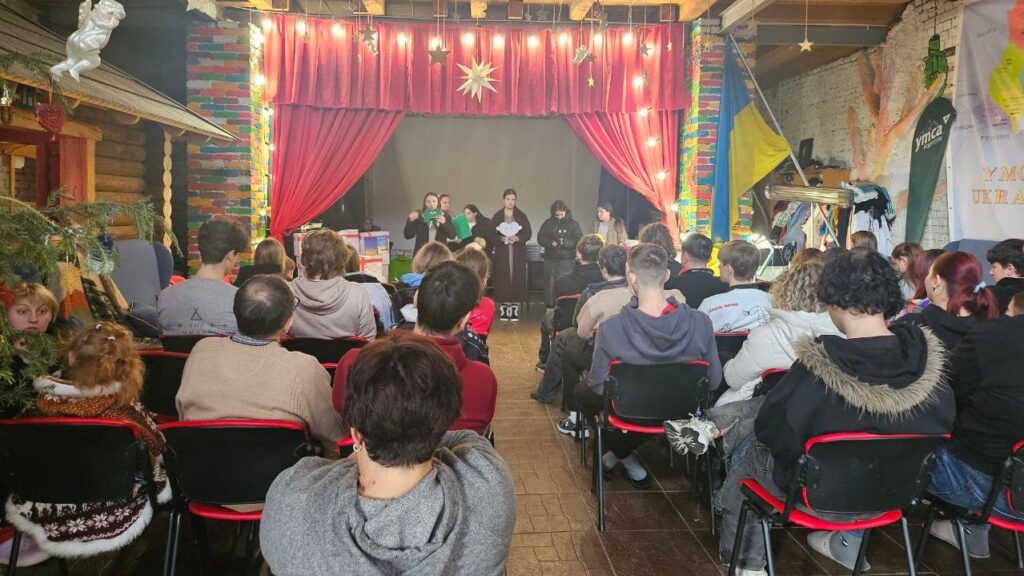
After the first session in November 2025, the Drivers of Democracy Project, a joint initiative of YMCA Ukraine and Kiev University Politechnical Institute Department of Sociology and Law, brought together again 26 students and youth activists, as well as four project leaders. They are all interested in learning about applied conflict transformation, so today’s discussion focused on shifting activities from a personal to local community level.
The workshop started by sharing participants’ experience in application of some of the tools learnt back in November. Out of four tools presented then, they applied three pertaining to their local activist contexts: the ABC triangle, the Iceberg and the DNH Dividers and Connectors analysis. Their feedback was that the tools helped them specify not only their immediate conflict context, but also understand better the actors, the actual and potential conflict dynamics and its driving forces. Participants claim that now, thanks to the experience of applying these tools, they know how to recognize who is in conflict with whom. They feel empowered to deal with emotions of those involved in conflicts and deal with individuals’ unconstructive behavior detrimental to the group, which they find especially important among the youth.
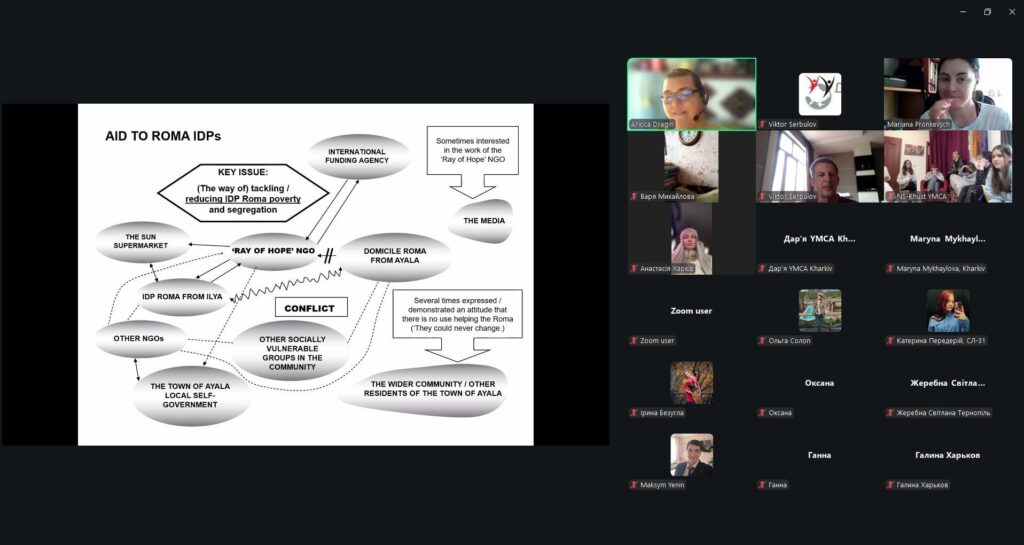
Ankica Dragin, the workshop facilitator, introduced two new practical tools for better understanding of people’s unconstructive behavior in challenging situations: the Human Behavior Lens and Conflict Mapping. As an experienced youth and peace activist and a Do No Harm (DNH) methodology practitioner and trainer, she shared her local projects related experience – blunders and successes alike! – pertaining to conflict-sensitive activities planning and implementation. The workshop conclusion was that peace work is far more than just individuals’ goodwill. It requires awareness, determination, skills, planning, perseverance and – philanthropy.